
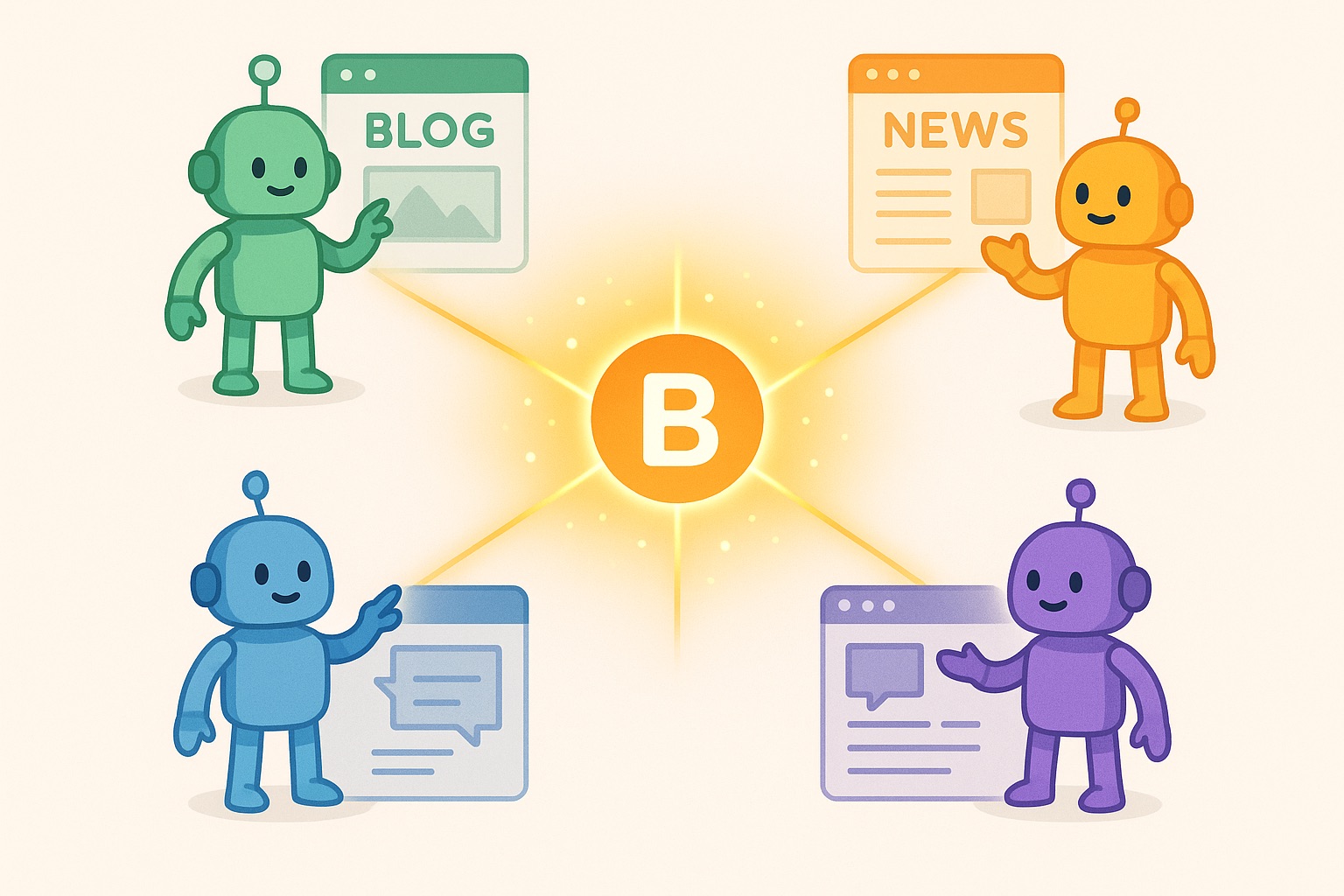
 \n\n\nFor 20 years, SEO strategy revolved around one core concept: backlinks. Get other sites to link to you, and Google rewards you with rankings.\n\nThat playbook is breaking down. Not because backlinks don't matter for Google (they still do). But because the fastest-growing discovery channel—AI search—doesn't work on links at all.\n\nLLMs don't follow hyperlinks. They follow mentions.\n\n## How AI Recommendations Actually Work\n\nWhen ChatGPT recommends a CRM tool, it's not crawling the web and counting backlinks in real-time. It's drawing on patterns from its training data plus (in some cases) real-time search results.\n\nWhat matters in that process:\n\n- Frequency of mention: How often is this brand discussed in the training data?\n- Context of mention: Is it mentioned positively? As an expert? As a recommendation?\n- Source authority: Is it mentioned in credible contexts (expert discussions, authoritative publications)?\n- Consistency: Does the brand appear in similar contexts across multiple sources?\n\nNotice what's NOT on this list: anchor text, dofollow vs nofollow, link placement, or any other traditional link metric.\n\nKevin Indig's analysis in Growth Memo crystallized this shift: "In the world of LLMs, a mention on Reddit can be worth more than a backlink from a DR90 website."\n\n## The New Citation Hierarchy\n\nSurfer SEO and Try Profound both published research in 2025 on which sources LLMs preferentially cite. The emerging hierarchy looks like this:\n\nTier 1: Community platforms\n- Reddit (especially for Perplexity and increasingly Google AI Overviews)\n- Stack Overflow / Stack Exchange (for technical topics)\n- Quora (declining but still referenced)\n\nTier 2: Knowledge bases\n- Wikipedia (especially for ChatGPT)\n- Industry-specific wikis and knowledge bases\n\nTier 3: Expert content\n- YouTube (especially for Google AI Overviews)\n- Industry publications and blogs\n- Podcast transcripts (a growing signal)\n\nTier 4: Company-owned content\n- Your website (still matters, but less than you'd think)\n- Your blog\n- Your documentation\n\nThe inversion is striking. In SEO, your own website is the center of your strategy. In GEO, third-party mentions are more important than anything on your own domain.\n\n## Why Community Validation Beats Editorial Links\n\nThere's a logic to why LLMs weight community sources so heavily.\n\nA backlink from Forbes might mean you paid for a sponsored post. A glowing review on G2 might be incentivized. A press release is literally paid content.\n\nBut when a random person on Reddit says "I switched from [Competitor] to [Your Brand] and it's been great because..." that's hard to fake at scale. It's a genuine signal of product quality and user satisfaction.\n\nLLMs are trained on massive datasets where they learn to distinguish authentic recommendations from marketing. Community platforms, despite their noise, contain some of the most authentic product discussions on the internet.\n\n
Industry
Third-Party Mentions Are the New Backlinks (And How to Get Them)
geobuddy.co
G
industryDecember 5, 20259 min read
Third-Party Mentions Are the New Backlinks (And How to Get Them)
LLMs don't follow links—they follow mentions. Reddit, YouTube, and Wikipedia now drive AI recommendations more than traditional backlinks ever did.
G
GeoBuddy TeamG
Published by
GeoBuddy Team
AI Visibility Experts
We've spent the last two years studying how AI assistants recommend brands. What started as curiosity about ChatGPT's responses has turned into a full-time obsession with understanding the mechanics of AI visibility.
Ready to Improve Your AI Visibility?
Check how AI engines currently mention your brand — free, instant results.
Free AI Visibility Check