
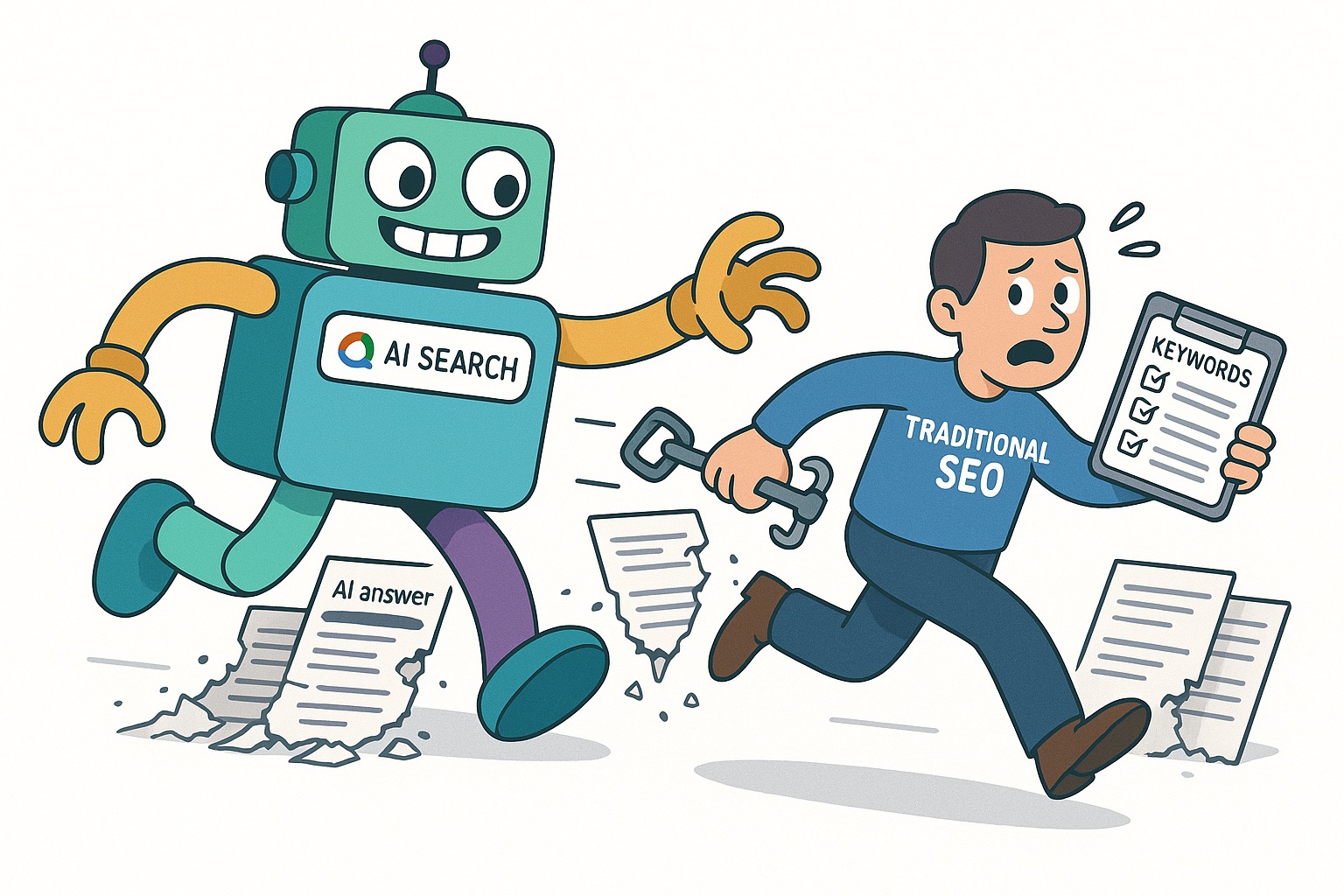
"SEO is dead" is the new "SEO is dead."
Voice search was going to kill it. Zero-click results were going to kill it. Now AI search is going to kill it.
What we can and can't measure
We don't have other companies' analytics, and we'd be careful with anyone who quotes a clean percentage for "traffic lost to AI". What we do measure is the other half of the question: when a buyer asks an AI engine instead of Google, does your brand come up at all?
Since 2026-02-16, 2,611 free checks on geobuddy.co asked ChatGPT, Claude, Gemini and Perplexity 3 buyer questions each. As of 2026-09-20:
- 60% of checked brands were not named in a single answer
- 80% scored under 30% visibility
- the average visibility score was 14.6%
How we count is on the methodology page.
Why that matters more than the traffic debate
Ranking on Google and being named by an AI engine are different tests. A results page shows ten links and the buyer picks one. An AI answer names a handful of brands and explains why. If you're not on that short list, you don't get a lower position. You get nothing.
So is SEO dead?
No. Google is still where most searches start, and the engines that search the web read the same pages Google ranks: when they name a brand, they usually cite a review site, a directory, a comparison article or the brand's own page. Good SEO is still the foundation.
What has changed is that SEO alone leaves the AI short list to chance.
What to do this month
- Ask the engines your customers' questions, in their language and with their city, and see whether you're named.
- Look at the pages the engines cite when they name a competitor. Those review sites, directories and comparisons are where you need to appear.
- Keep your SEO, and make sure your own site says plainly what you do, for whom and where. Engines quote pages that answer the question directly.