
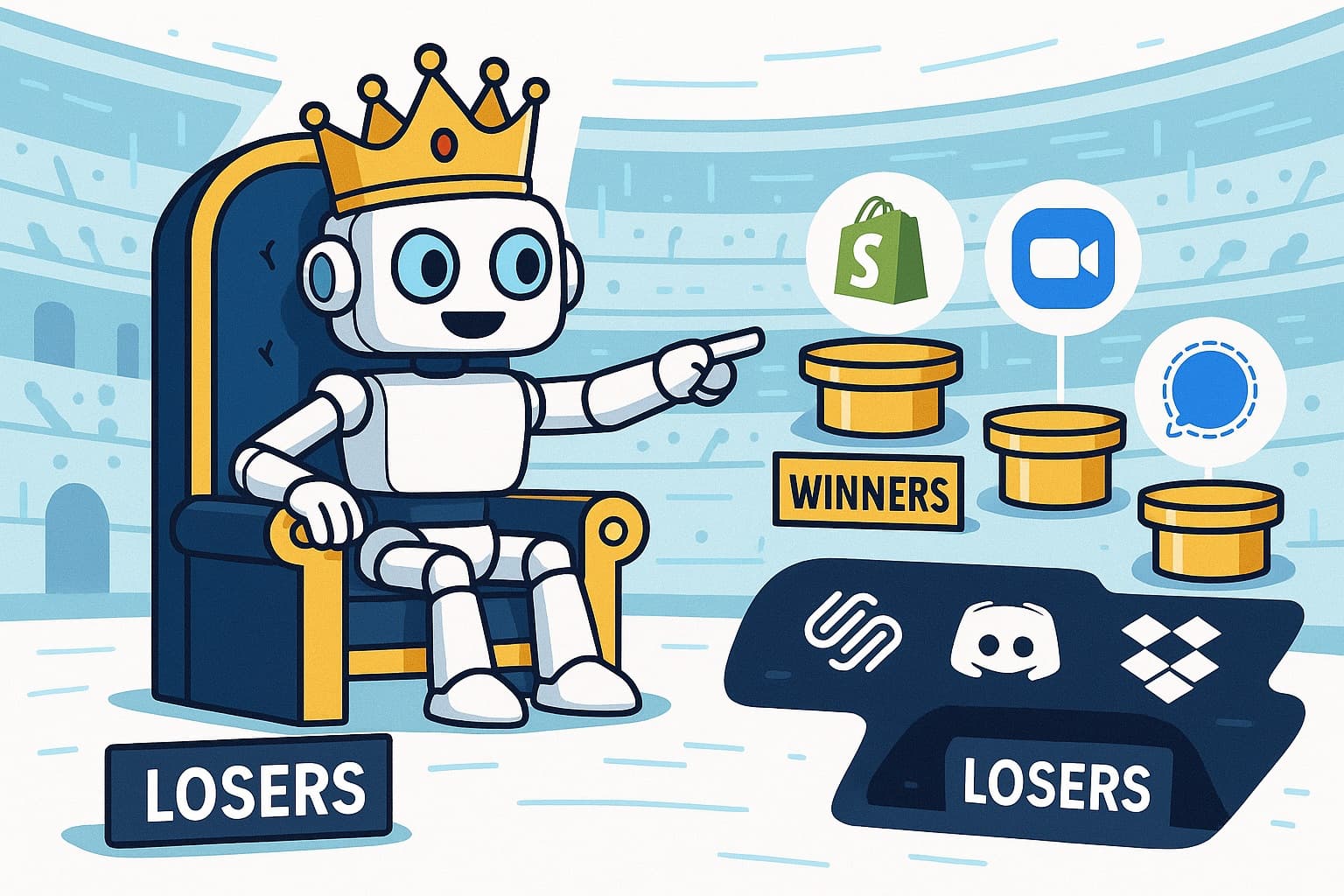
AI is not neutral. It never was. After analyzing 1,967 brands across ChatGPT, Claude, Gemini, and Perplexity, we can now prove it: AI search is creating a new class system for brands. And most brands are on the losing side.
Only 4% of brands are always recommended first. Another 19% are famous enough to get mentioned but never recommended as the top choice. That's not a fair competition — that's a brutal caste system where AI engines act as kingmakers, picking winners and losers with algorithmic authority.
Shopify dominates with 100% primary recommendations while Squarespace gets 0%. Both are e-commerce platforms. Both serve similar needs. Yet in AI's eyes, one is the obvious choice and the other is a forgotten alternative. This isn't about quality — it's about how AI training patterns create digital dynasties.
The uncomfortable truth: We found 60 major brands that AI engines mention but never recommend first. Dropbox has 75% visibility but 0% primary rate. Udemy gets mentioned 10 times but never as the #1 choice. These aren't failing companies — they're victims of AI's winner-take-all recommendation patterns.
As SparkToro reports, two-thirds of Google searches already end without a click. ChatGPT hit 100 million users faster than any app in history. When AI search becomes the default, being an "alternative" mention becomes the new page 2 of Google — theoretically visible but practically irrelevant.
The AI Class System: Five Tiers of Brand Favoritism
316 brands with ≥6 mentions, ranked by how often AI engines recommend them first
The Five Tiers of AI
Our analysis of 316 brands with significant AI visibility reveals a rigid hierarchy. AI engines don't just recommend — they stratify. Every brand falls into one of five distinct tiers based on how often they're recommended as the primary choice:
Tier 1: AI Favorites (80%+ Primary Rate) — The Chosen Few
40 brands live in AI's promised land, getting primary recommendations 80-100% of the time. Average sentiment: 0.80. Average visibility: 80%. These brands don't compete — they dominate. AI engines describe them with words like "leading," "top-rated," and "industry standard."
Tier 2: AI Liked (50-79% Primary) — The Preferred Options
79 brands enjoy AI's favor most of the time. They're often recommended first but occasionally face competition. This tier includes strong B2B tools and established consumer brands that have consistent positioning across training data.
Tier 3: AI Neutral (20-49% Primary) — The Flip-a-Coin Zone
86 brands live in AI purgatory — sometimes heroes, sometimes alternatives. Their fate depends on how users phrase questions and which AI engine responds. This unpredictability makes them hard to optimize for and harder to predict.
Tier 4: AI Sidelined (1-19% Primary) — The Occasional Mentions
51 brands barely register as primary choices. They get mentioned when AI engines want to show comprehensive options, but they're rarely the star recommendation. Think of them as supporting actors in AI's recommendation theater.
Tier 5: Forever Bridesmaid (0% Primary) — The Eternal Alternatives
60 brands — 19% of all significantly mentioned brands — never get recommended first. Not once. Dropbox, Udemy, Squarespace, Wealthfront — these aren't obscure companies. They're well-funded, feature-rich brands that AI engines consistently position as alternatives, never as the primary choice.
This tier system isn't random. It reflects patterns in training data, third-party validation, and brand messaging consistency. As we'll see in our analysis of how AI engines disagree on brand recommendations, these patterns are surprisingly stable across different AI providers.
The 4% Club: Brands That AI Always Recommends
Only 13 brands out of 316 achieve perfect scores — 100% primary recommendation rates across all AI engines. These aren't necessarily the biggest companies. They're the brands that AI training patterns have elevated to "obvious choice" status.
The Always Primary Club includes: Shopify (E-commerce), Signal (Encrypted Messaging), Unbounce (Landing Pages), Zendesk (Customer Service), G2 (Software Reviews), Zoom (Team Communication), Teladoc Health (Telemedicine), Perplexity AI (AI Search), PC Part Picker (Hardware), Facebook Marketplace (Local Sales), UiPath (RPA), Cloudflare (CDN), and AirDNA (Real Estate Data).
What unites these 13? Crystal-clear positioning, consistent third-party validation, and zero ambiguity about their core use case. Signal isn't just a messaging app — it's the encrypted messaging app (0.98 sentiment!). Shopify isn't just an e-commerce platform — it's the default recommendation with 0.83 sentiment across all contexts.
Notice what's missing: no Google products, no Microsoft products, no Apple products. Tech giants with massive market share don't automatically win AI recommendations. Clear positioning beats market dominance in AI's recommendation logic.
Compare this with brands that achieve primary status in specific contexts, as detailed in our deep-dive on how different AI engines favor different brands.
The 4% Club: 13 Brands That AI Always Recommends First
Only 13 out of 316 brands (4.1%) achieve 100% primary recommendation rate — the true AI kingmakers' favorites
The 19% Problem: Famous Brands AI Never Recommends First
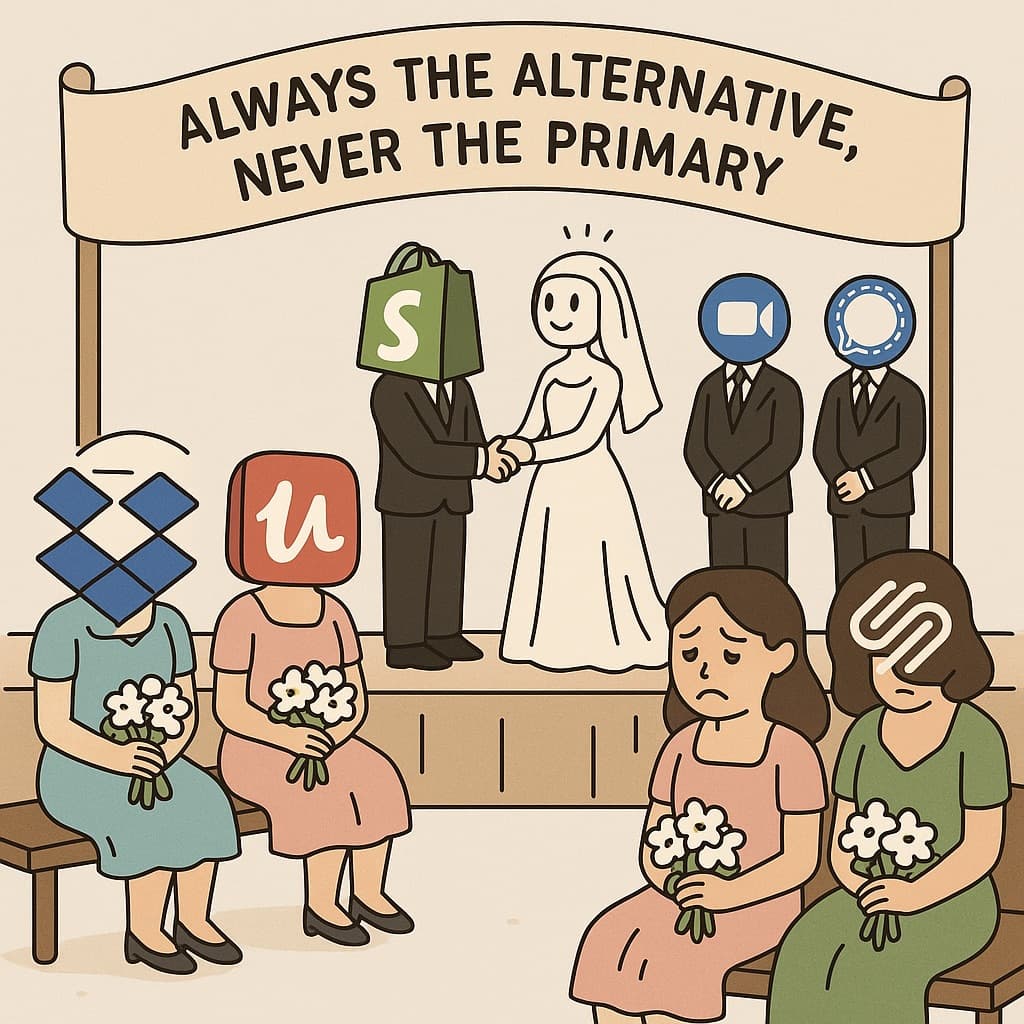
Here's the story no one talks about: 60 well-known brands have 0% primary recommendation rates despite significant AI visibility. These aren't failing startups. They're established companies with millions in funding, strong feature sets, and loyal user bases. Yet AI engines consistently position them as alternatives, never as first choices.
The Hall of Shame: Forever Bridesmaids
- Udemy: 83% visibility, 10 mentions, 0% primary. Despite being a major online learning platform, AI never recommends it first for any educational query.
- Dropbox: 75% visibility, 8 mentions, 0% primary. One of the most recognizable cloud storage brands, yet always an alternative to Google Drive or OneDrive.
- Squarespace: 67% visibility, 9 mentions, 0% primary. A $6.6 billion company that AI treats as a secondary option to Shopify every single time.
- Wealthfront: 75% visibility, 8 mentions, 0% primary. A robo-advisor with $50+ billion in assets under management that AI never suggests first for investment advice.
- Freshdesk: 83% visibility, 6 mentions, 0% primary. A major customer service platform that exists in Zendesk's shadow in AI recommendations.
What's devastating about Forever Bridesmaid status is the false hope. These brands think they have AI visibility because they get mentioned. But being mentioned as an alternative is worse than being ignored — it signals to users that you're the second choice, the backup plan, the "if you can't afford the real thing" option.
This phenomenon extends beyond individual brands to entire categories. Our analysis of skincare brands shows how AI invisibility affects whole industries. When categories lack clear leaders, AI engines often default to the same few alternatives rather than exploring the full competitive landscape.
The marketing implication: If your brand is stuck in Forever Bridesmaid status, traditional marketing metrics (traffic, mentions, brand awareness) become misleading. High visibility with 0% primary rate means AI sees you as a backup, not a leader. And as AI search grows, backup status becomes commercially irrelevant.
Forever Bridesmaid Hall of Fame: Famous But Never First
60 brands (19%) that AI engines mention but never recommend as the #1 choice — including big names like Dropbox and Udemy
Industry Battlegrounds: Where Winners Take Everything
The AI kingmaker effect isn't random — it's most brutal in specific industry battlegrounds where small positioning differences create massive recommendation gaps. Let's examine the most shocking disparities:
E-commerce Platform Bloodbath
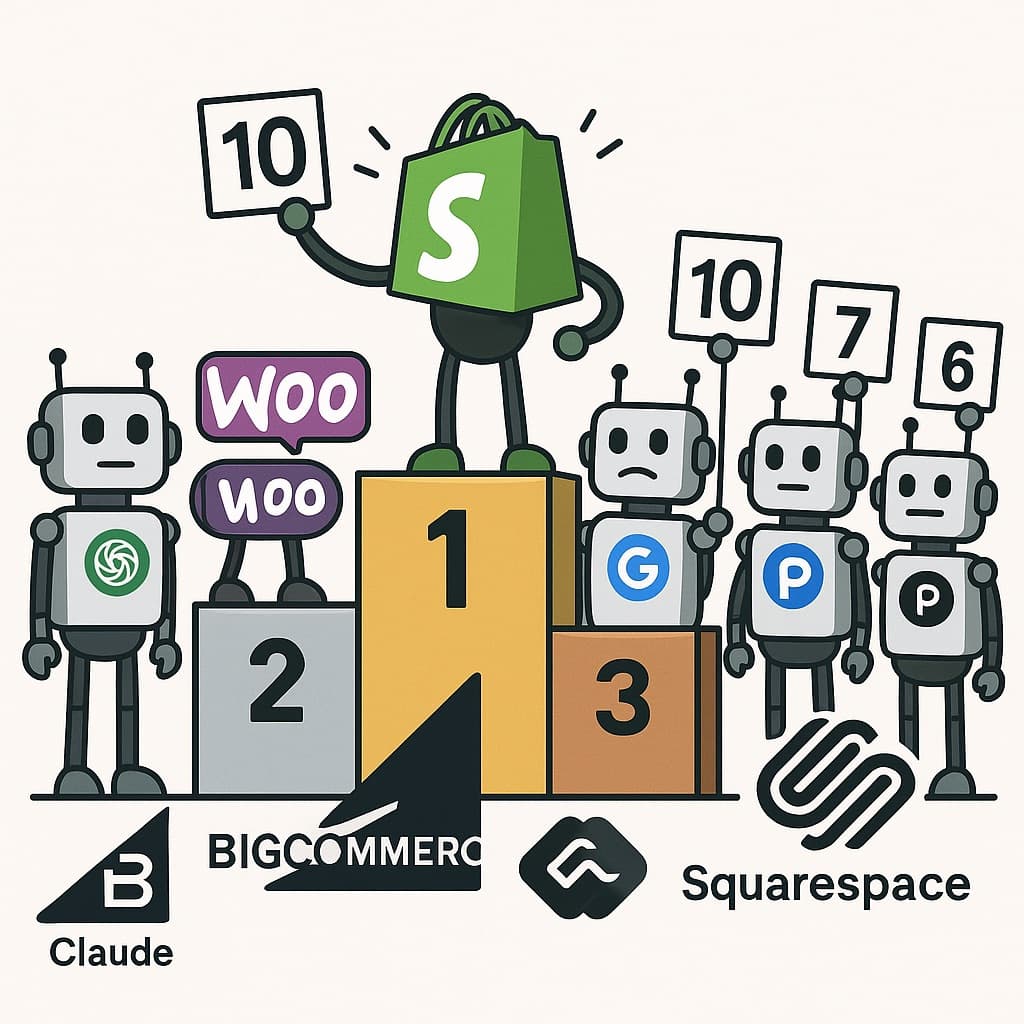
This is where AI favoritism gets most extreme. Shopify achieves 100% primary recommendations with 0.83 sentiment across 12 mentions. WooCommerce, despite being the most-used e-commerce platform globally, gets just 18.2% primary rate. Squarespace and Wix eCommerce — both billion-dollar companies — get 0% primary rate.
How is this possible? Shopify owns the narrative. When tech blogs compare e-commerce platforms, Shopify is consistently positioned as the "professional" or "enterprise" choice. When users ask for e-commerce advice in forums, Shopify dominates recommendations. AI training reflects this pattern, creating a recommendation monopoly that's virtually impossible to break.
WooCommerce's struggle illustrates the platform positioning trap — being "WordPress-based" makes it sound technical rather than user-friendly. Squarespace gets positioned as "for designers" rather than "for e-commerce." These subtle framing differences compound over millions of training examples.
E-commerce Platform Battle: Shopify's Total Domination
Same industry, wildly different AI treatment — Shopify gets 100% primary while Squarespace gets 0%
Team Communication: David vs Goliath, David Wins
Microsoft Teams has enterprise dominance and billions in backing. Zoom gets 91.7% primary recommendations. This is the most counterintuitive finding in our dataset. Microsoft's integration advantages, enterprise sales force, and bundling strategy mean nothing in AI recommendation land.
Zoom's AI advantage isn't technical — it's narrative. Zoom became synonymous with video calling during COVID. When people say "let's Zoom," they mean video call, regardless of platform. AI training absorbed this linguistic dominance and converted it into recommendation dominance.
Microsoft Teams gets trapped by its integration messaging. It's positioned as "part of Microsoft 365" rather than as the best video calling solution. Discord gets 0% primary because it's framed as "for gamers" despite excellent communication features.
This pattern appears consistently in our analysis of why Zoom achieves 88% AI visibility while other brands get zero.
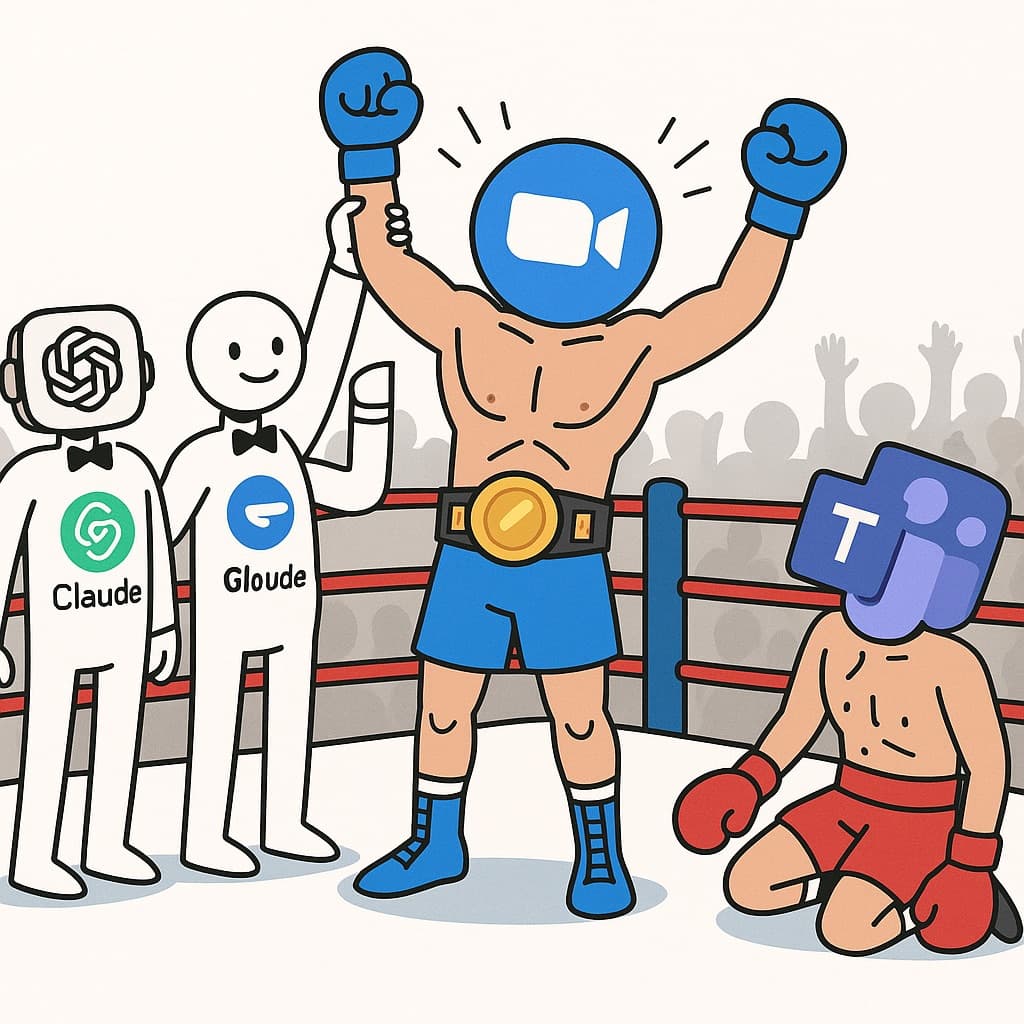
Team Communication: Zoom Crushes Microsoft Teams
Enterprise giant Microsoft Teams gets only 33% primary rate while Zoom dominates at 92%
CRM Software: The 91% Alternative Problem
Zoho CRM gets mentioned 11 times but recommended first only once — that's a 91% "alternative" rate. This is the clearest example of AI's binary classification: HubSpot CRM is "the CRM for small businesses," while everything else becomes "an alternative."
The CRM category shows how AI recommendation patterns can be more brutal than market reality. HubSpot doesn't dominate CRM market share, but it dominates CRM mindshare in AI training data through consistent content marketing and clear positioning as "the marketing-friendly CRM."
Zoho's international presence, Freshworks' feature richness, and Freshsales' pricing advantages become irrelevant when AI engines have already decided who the default recommendation is. This creates a devastating competitive moat for incumbent leaders.
We explore similar dynamics in our detailed CRM AI leaderboard analysis, which reveals how even Salesforce struggles with AI recommendations despite market dominance.
CRM Software: HubSpot vs The Eternal Alternatives
Zoho CRM mentioned 11 times but only recommended first once — that's a 91% 'alternative' rate
The Kingmaker Engine: From Decisive to Democratic
Not all AI engines are equally decisive in their favoritism. Our analysis reveals distinct "personalities" in how each AI system approaches brand recommendations, from dictatorial decisiveness to democratic list-making:
Gemini: The Benevolent Dictator (55.9% Rank 1)
Gemini is the most decisive kingmaker, giving 55.9% of brand mentions top ranking while mentioning only 2.7 competitors on average. When Gemini recommends, it recommends with conviction. It rarely hedges with "it depends" or provides extensive alternative lists.
Gemini's decisiveness makes it the most predictable for brands to optimize for — if you can become Gemini's top choice in a category, you'll likely stay there. But this also makes it the hardest to crack for challengers.
Claude: The Thoughtful Analyst (30.9% Rank 1)
Claude takes a more balanced approach, providing primary recommendations 30.9% of the time while mentioning 6.7 competitors on average. It seems to prefer providing context and alternatives rather than making definitive judgments.
Perplexity: The Research Engine (30.3% Rank 1)
True to its search-focused nature, Perplexity provides primary recommendations 30.3% of the time with 5.0 competitors per response. It behaves more like a research assistant than a recommendation engine.
ChatGPT: The Democratic Lister (31.9% Rank 1)
ChatGPT is the least decisive kingmaker, mentioning 7.2 competitors per response. Despite having the largest user base, it's most likely to provide comprehensive lists rather than clear recommendations. This makes ChatGPT optimization more complex but also more forgiving for challenger brands.
These differences have profound implications for GEO strategy. Optimizing for Gemini requires becoming the obvious choice. Optimizing for ChatGPT requires being included in comprehensive comparisons. Understanding these engine personalities is crucial for effective AI positioning.
For deeper insights into engine-specific patterns, see our comprehensive guide to how competitors achieve #1 status on ChatGPT.
The Kingmaker Engines: From Dictator to Democrat
Gemini picks clear winners (55.9% #1 rank), ChatGPT lists everything (7.2 competitors average)
Industry Winners vs Losers: The Primary Rate Divide
AI favoritism isn't evenly distributed across industries. Some sectors enjoy clear leadership patterns where 60-70% of recommendations go to primary brands. Others are AI wastelands where almost everything gets classified as an alternative.
The Winners: Industries Where AI Picks Clear Favorites
- Confectionery (69.2% primary rate): Candy and chocolate brands enjoy clear AI favorites, likely due to strong brand recognition and emotional associations.
- Online Grocery (65% primary rate): Instacart and similar services benefit from clear use-case positioning and first-mover advantages.
- Time Tracking (64.3% primary rate): Tools like Toggl and RescueTime have established clear category leadership in AI training patterns.
The Losers: Industries Where Everything's an Alternative
- Handmade Goods (0% primary rate): Etsy dominates but AI engines treat the entire category as alternatives rather than making definitive recommendations.
- Investment Apps (0% primary rate): Regulatory caution makes AI engines avoid primary recommendations for financial products.
- Coffee Chains (3.3% primary rate): Despite massive brands like Starbucks and Dunkin', AI engines rarely recommend specific coffee chains as primary choices.
- Cryptocurrency Exchanges (11.8% primary rate): Regulatory uncertainty and volatility make AI engines cautious about definitive crypto recommendations.
What separates winners from losers isn't market size — it's clarity of use cases and training data patterns. Time tracking tools get high primary rates because their use cases are clear and unambiguous. Coffee chains get low primary rates because coffee preference is highly personal and location-dependent.
This pattern explains why some well-funded industries struggle with AI visibility, as detailed in our analysis of coffee wars in AI search.
Industry Winners vs Losers: The Primary Rate Divide
Some industries have clear AI favorites (69% primary rate) while others are AI wastelands (0% primary)
Why AI Picks Favorites (Our Theory)
AI favoritism isn't random — it follows predictable patterns based on training data characteristics. After analyzing hundreds of brand positioning patterns, we've identified three key factors that determine AI recommendation hierarchy:
1. Narrative Consistency Across Sources
Brands that get described the same way across different sources become AI favorites. Shopify is consistently described as "professional e-commerce platform" across tech blogs, user forums, and comparison sites. This consistency creates strong AI preference patterns.
Brands with inconsistent messaging — described as "enterprise" in some contexts and "small business" in others — confuse AI training patterns and end up in the neutral or sidelined tiers.
2. Third-Party Validation Density
AI engines favor brands that other sources consistently recommend. This isn't just about mentions — it's about the density of positive recommendations across independent sources.
Zoom benefits from thousands of "best video calling app" articles written during COVID. These third-party validations compound in AI training, creating recommendation momentum that's nearly impossible to overcome with direct marketing.
Our research on which websites AI engines trust most reveals how certain source domains carry more weight in AI recommendation patterns.
3. Clear Product Category Positioning
Brands that own clear categories in AI's mental model get primary status. Brands that exist "between" categories become alternatives.
Signal owns "encrypted messaging." Zendesk owns "customer service software." Shopify owns "e-commerce platform." These clear category associations make AI recommendation decisions obvious.
Brands like Notion (productivity? note-taking? project management?) or Airtable (database? spreadsheet? CRM?) struggle because they don't fit cleanly into AI's category framework, despite having excellent products and strong user bases.
This positioning challenge is explored in depth in our guide to upgrading from alternative to primary AI status.
The Sentiment-Success Correlation: Love = Recommendations
Higher sentiment strongly predicts higher primary recommendation rates — AI engines recommend brands they like
The Uncomfortable Questions
The AI kingmaker effect raises profound questions about market fairness, competition, and the future of business discovery. As AI search becomes dominant, we must confront uncomfortable realities about algorithmic influence on commercial outcomes.
Is This Fair?
AI recommendation patterns reflect existing biases in training data, amplifying advantages for brands that already dominate content and conversation. This isn't intentional bias — it's systematic bias that favors incumbents and well-funded content marketing operations.
Small businesses and innovative startups face a cruel irony: they need AI visibility to compete, but AI visibility requires the kind of consistent third-party validation that comes from already being successful.
Are We Creating AI-Powered Monopolies?
When 100+ million ChatGPT users get the same brand recommendations, small positioning advantages become massive market advantages. The traditional long tail of discovery — where users might find alternatives through diverse search results — disappears when AI provides definitive recommendations.
Gartner predicts traditional search volume will drop 25% by 2026 as AI search grows. This means fewer opportunities for serendipitous brand discovery and more reliance on AI-curated recommendations.
Can Brands Escape Their AI Tier?
Our data suggests AI tiers are surprisingly sticky. Brands with 0% primary rates across hundreds of mentions rarely achieve primary status without fundamental positioning changes. The AI training corpus is massive and slow-moving — individual marketing campaigns have minimal impact on recommendation patterns.
However, the brands that do breakthrough — like how some brands improve sentiment across different engines — provide models for strategic repositioning.
Should AI Recommendations Be Regulated?
As AI engines become the primary channel for business discovery, their recommendation patterns may require antitrust scrutiny. When algorithmic preferences determine market winners, the line between useful automation and anti-competitive gatekeeping becomes crucial.
Unlike traditional search results, AI recommendations feel authoritative and final. Users trust "ChatGPT recommends Shopify" more than "Shopify ranks #1 in search results." This trust makes AI recommendation patterns more commercially powerful and potentially more problematic.
Winners vs Losers: The AI Extremes
The 4% Club (always recommended) vs Forever Bridesmaids (never recommended first) — AI creates extreme winners and losers
What You Can Do: From Bridesmaid to Favorite
Understanding AI favoritism patterns is the first step toward influencing them. While AI tiers are sticky, they're not permanent. Brands can move from Forever Bridesmaid to AI Favorite status through strategic positioning changes.
1. Audit Your Current AI Status
Before optimizing, understand where you stand in the AI hierarchy. Test how different AI engines respond to various queries about your category. Are you getting primary recommendations, alternative mentions, or no mentions at all?
Semrush's GEO guide emphasizes: "You aren't competing to rank at the top — you're competing to be part of the answer itself." Understanding your current answer integration is crucial for improvement.
Use our free brand visibility checker to test your AI presence across all four major engines and identify specific improvement opportunities.
2. Clarify Your Category Positioning
Brands with clear, consistent category associations get primary status. Brands described differently across sources get alternative status. Audit how you're described across your website, third-party reviews, press coverage, and user discussions.
If you're described as "CRM" in some places and "sales automation" in others, AI engines don't know which category you belong to. Pick one primary category and ensure consistency across all content and third-party mentions.
3. Build Third-Party Validation
AI engines trust consistent external validation more than direct marketing claims. Focus on earning mentions in comparison articles, user forums, and industry roundups where you're positioned as a primary recommendation.
Otterly.AI research and GetMentioned.co analysis show that brands mentioned positively across 150+ sources achieve higher AI visibility than brands focused on direct optimization.
4. Optimize for Engine Personalities
Different AI engines require different approaches. Gemini rewards clear, decisive positioning. ChatGPT rewards comprehensive feature coverage. Claude responds to balanced, analytical content.
Create content that aligns with each engine's decision-making patterns while maintaining consistent core messaging about your category position.
5. Monitor AI Sentiment Patterns
Sentiment strongly correlates with recommendation rates. Brands with 0.80+ sentiment get primary recommendations 90% of the time. Brands with <0.50 sentiment rarely break into primary status.
Track not just whether you're mentioned, but how enthusiastically AI engines describe your brand. Negative sentiment creates recommendation death spirals that compound over time.
For detailed sentiment optimization strategies, review our analysis of exact words AI uses to describe brands and how to influence those patterns.
6. Think Long-Term Positioning, Not Short-Term Tactics
AI training patterns change slowly — quick wins are rare, but sustainable advantages are massive. Brands that achieve AI favorite status enjoy compound advantages as training data reinforces their leadership position.
Focus on fundamental positioning changes rather than tactical keyword optimization. Seer Interactive data shows brands featured in AI Overviews see 35% higher organic CTR and 91% higher ad CTR — the benefits extend beyond just AI visibility.
The opportunity: Most brands haven't realized they're in an AI positioning battle yet. The companies that understand these dynamics now and act strategically have 18-24 months to establish AI favorites status before the market catches up. After that, competing against entrenched AI recommendations becomes exponentially harder.
For comprehensive strategic guidance, explore our complete collection of GEO vs SEO strategy differences and start building your AI-first content approach today.
Frequently Asked Questions
What percentage of brands are always recommended first by AI?
Only 13 brands out of 316 (4.1%) achieve 100% primary recommendation rates across all AI engines. This exclusive club includes Shopify, Signal, Zoom, Zendesk, and 9 others that AI engines consistently recommend as the obvious choice.
How many brands are famous but never recommended first?
60 brands (19% of those with significant mentions) are "Forever Bridesmaids" — mentioned but never recommended as #1. This includes major names like Dropbox (75% visibility, 0% primary), Udemy (83% visibility, 0% primary), and Squarespace (67% visibility, 0% primary).
Why does Shopify have 100% primary rate while Squarespace has 0%?
Despite both being e-commerce platforms, Shopify benefits from consistent "professional e-commerce" positioning across all training sources, while Squarespace gets positioned as "for designers" rather than "for e-commerce." These framing differences compound across millions of training examples.
Which AI engine is most decisive in picking winners?
Gemini acts as the most decisive "kingmaker" with 55.9% of mentions being rank #1 recommendations and only 2.7 competitors mentioned on average. ChatGPT is least decisive, mentioning 7.2 competitors per response.
How does AI sentiment correlate with recommendation rates?
Strong positive correlation exists. AI Favorites tier (80%+ primary rate) averages 0.80 sentiment, while Forever Bridesmaids (0% primary) average just 0.43 sentiment. AI engines recommend brands they describe more positively.
What industries have the highest and lowest AI favoritism?
Winners: Confectionery (69.2% primary rate), Online Grocery (65%), Time Tracking (64.3%). Losers: Handmade Goods (0%), Investment Apps (0%), Coffee Chains (3.3%), Cryptocurrency Exchanges (11.8%). Clarity of use cases matters more than market size.
Is AI brand favoritism fair or creating monopolies?
AI creates winner-take-all dynamics by amplifying existing training data patterns, which often favor well-funded incumbents. While not intentionally biased, these patterns create new barriers for challengers and may require antitrust scrutiny as AI search grows.
How can brands move from 'alternative' to 'primary' status?
Success requires: (1) consistent category positioning across all sources, (2) building third-party validation density, (3) aligning content with specific AI engine personalities, and (4) long-term strategic repositioning rather than tactical optimization.
Will AI recommendation dominance increase over time?
Yes. Gartner predicts traditional search volume will drop 25% by 2026, while AI Overview features see 35% higher organic CTR and 91% higher ad CTR. AI recommendation patterns will become increasingly critical for business discovery.
What's the business impact of being AI-invisible?
Brands with 0% primary rates face existential threat as AI search grows. Being mentioned as an alternative becomes the "page 2 of Google" equivalent — theoretically visible but commercially irrelevant when AI provides definitive recommendations to 100+ million users.