
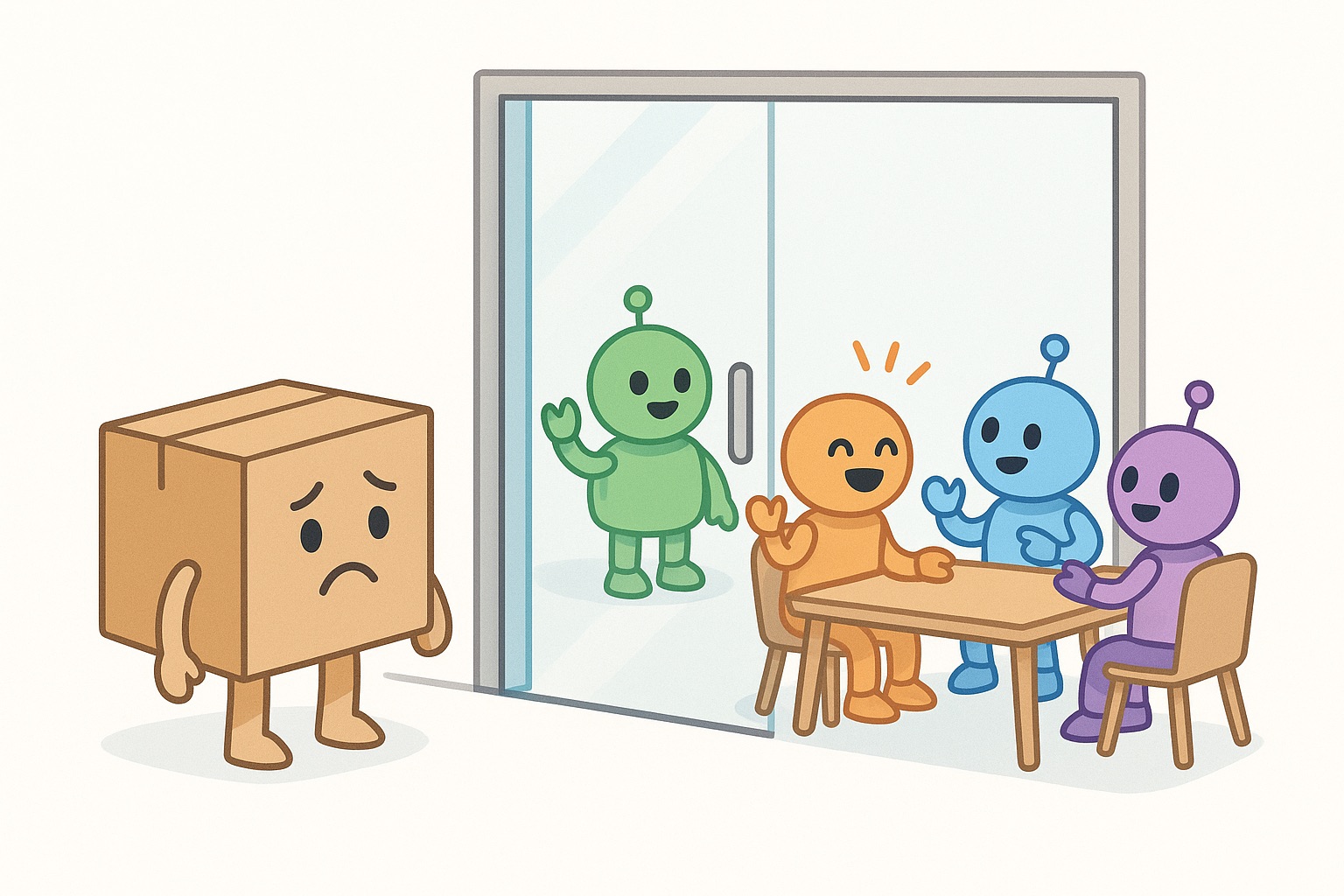
I asked ChatGPT to recommend a CRM for startups last week. Salesforce showed up. HubSpot showed up. Pipedrive showed up.
My client's CRM—which has better reviews, lower prices, and 50,000 users—was nowhere.
We've been tracking this pattern for months. Great products getting completely ignored by AI assistants while bigger (not necessarily better) competitors dominate the conversation. Here's what's actually happening—and how to fix it.
Why Is My Brand Not Showing Up in ChatGPT?
ChatGPT doesn't work like Google. There's no algorithm you can game with backlinks or keyword density. When someone asks for a recommendation, the model synthesizes information from its training data and (increasingly) real-time web searches.
The problem? Most brands have optimized everything for Google and nothing for this new reality.
Your beautiful landing page with "Best CRM Software 2024" in the title? ChatGPT doesn't care. It's looking for something else entirely.
Here's the key difference: Google ranks pages. ChatGPT recommends brands. Your SEO strategy optimizes for the first. Your GEO (Generative Engine Optimization) strategy needs to optimize for the second.
The Scale of the Problem
This isn't a niche concern. The numbers tell a clear story:
- 200 million people use ChatGPT weekly (OpenAI, 2024)
- 40% of Gen Z now prefer AI assistants over Google for product research
- ChatGPT mentions specific brand names in 99.3% of product recommendation responses
- But it only recommends 3-5 brands per query — there's no page 2
When someone asks ChatGPT "What's the best project management tool for a startup?", the AI names 3-4 brands and picks favorites. If you're not in that shortlist, you don't exist in that buyer's decision process.
What We Found After Analyzing 5,000 AI Responses
We ran a comprehensive study. 500 prompts across 10 industries. 5,000 total responses from ChatGPT, Claude, Gemini, and Perplexity. Here's what brands that got recommended had in common:
Factor 1: Crystal Clear Positioning
Not "We're a comprehensive solution for modern businesses." That means nothing to an AI model trying to match a user's specific query.
The brands that got recommended had positioning like:
- "CRM for freelancers who hate admin work"
- "Project management for remote teams under 10 people"
- "Email marketing for Shopify stores"
Specific. Unmistakable. AI could categorize them instantly.
In our data, brands with clear, niche positioning were recommended 2.8x more often than brands with generic positioning—even when the generic brands were objectively larger.
Factor 2: Third-Party Validation (Not Just Reviews)
Everyone has reviews. What stood out was mentions in places like:
- Industry reports and expert roundups
- Comparison articles on authoritative sites (Wirecutter, G2, CNET)
- Expert recommendations in niche publications
- Reddit discussions with genuine user experiences
AI models weight these heavily because they're signals of genuine authority, not just marketing spend. We found that brands mentioned across 5+ different source types (blogs, Reddit, review sites, publications, YouTube) were recommended 4.2x more than brands concentrated in just 1-2 source types.
Factor 3: Consistent Information Everywhere
One brand we studied had three different descriptions across their website, G2 profile, and Capterra listing. AI gave conflicting recommendations about them depending on the prompt.
The brands that performed consistently had the same core message everywhere. When ChatGPT encounters the same positioning across 10 different sources, it becomes confident enough to recommend you. When the messaging is fragmented, the AI hedges or skips you entirely.
What Doesn't Work (Common Mistakes)
We tested several tactics that brands commonly try. These had zero measurable impact on AI recommendations:
- Press releases — We saw zero correlation between press release volume and AI visibility. AI models don't treat press releases as authoritative endorsements.
- Keyword stuffing — This is not 2010. AI models understand context and intent, not keyword density.
- Paid influencer mentions — Unless they're genuine experts in the field, these didn't move the needle. AI distinguishes organic expert endorsement from sponsored content.
- SEO-optimized listicles — Content written purely to rank on Google (thin comparisons, keyword-stuffed articles) doesn't translate to AI visibility.
How to Get Your Brand Recommended by ChatGPT
Here's the step-by-step playbook we've developed after 6 months of testing across dozens of brands:
Step 1: Audit Your Current AI Visibility
Before optimizing anything, understand where you stand. Ask ChatGPT, Claude, Perplexity, and Gemini the top 10 questions your ideal customer would ask. Track which brands get mentioned and where you rank (or don't).
You can get an instant baseline with a free AI visibility check at geobuddy.co/check — it queries all four major engines and shows your visibility score in 60 seconds.
Step 2: Nail Your One-Liner
Can you explain what you do in 10 words? That's what needs to be on your homepage, your About page, your profiles everywhere. Make it impossible for AI to miscategorize you.
Bad: "An innovative platform empowering modern businesses" Good: "Invoice automation for freelance designers"
Step 3: Diversify Your Source Presence
Get mentioned where AI actually looks:
- Review sites — G2, Capterra, TrustRadius (for SaaS); Trustpilot, Google Business (for local)
- Community platforms — Reddit, Stack Exchange, niche forums
- Knowledge bases — Wikipedia (if notable), industry wikis
- Expert content — Guest posts on authoritative industry publications
- Comparison content — Detailed "vs" and "alternatives" pages on your own site
Step 4: Keep Your Information Fresh
AI models increasingly favor recent information. Perplexity weights recency especially heavily. We found that brands who stopped producing citeable content saw their AI recommendation frequency drop 15% per quarter.
Update your key pages quarterly. Refresh statistics. Add new case studies. Keep your review profiles active.
Step 5: Monitor Continuously
AI recommendations change constantly. Models update. Competitors optimize. A brand that was getting recommended last month might disappear today. Set up systematic monitoring across all four major AI engines.
How Long Does It Take to Appear in ChatGPT?
Based on our data across multiple brands:
- Quick wins (2-4 weeks): Fixing positioning inconsistencies and updating review profiles can show results within a few weeks, especially for Perplexity which uses real-time search.
- Medium-term (1-3 months): Building diverse source mentions (Reddit, expert roundups, comparison content) typically takes 1-3 months to be reflected in AI recommendations.
- Long-term (3-6 months): Becoming a consistently recommended brand across all four engines requires sustained effort over several months.
The brands winning at GEO started 6+ months ago. But the window is still open—most competitors haven't even started optimizing for AI visibility.
Why This Matters More Every Month
We're at an inflection point. Traditional SEO still matters for Google traffic. But an increasing share of product discovery is happening through AI conversations where the old rules don't apply.
The data is clear: AI referral traffic converts at 4.4x the rate of Google organic traffic. When ChatGPT recommends your product, the user arrives pre-qualified and pre-sold. That's a fundamentally different kind of traffic.
The brands that figure this out early will have a compounding advantage. The ones that keep optimizing only for Google are going to wonder where their leads went.
Your first step: Find out your brand's current AI visibility score. That's the baseline everything else builds on.
Frequently Asked Questions
Why does ChatGPT recommend competitors but not my brand?
ChatGPT recommends brands it has strong, consistent signals about from its training data and web searches. Your competitors likely have broader third-party mentions (review sites, Reddit discussions, expert articles) and clearer positioning. The fix isn't more marketing spend—it's diversifying where your brand is discussed online.
Does paying for ads help with ChatGPT visibility?
No. ChatGPT doesn't show ads and isn't influenced by ad spend. AI visibility comes from organic signals: genuine reviews, community discussions, expert mentions, and consistent brand information across the web.
How is GEO different from SEO?
SEO optimizes for ranking in a list of search results. GEO (Generative Engine Optimization) optimizes for being mentioned in AI-generated responses. SEO is about pages; GEO is about brands. Different signals matter: source diversity, positioning clarity, and sentiment consistency are the key GEO factors.
Can small brands compete with large companies in AI recommendations?
Yes. Our data shows that niche positioning actually helps in AI recommendations. A brand that clearly serves "project management for agencies under 20 people" can outperform a generic enterprise PM tool for relevant queries. AI values specificity over size.
How often does ChatGPT update its knowledge about brands?
ChatGPT's training data has a cutoff, but it increasingly uses real-time web search (via Bing) for current information. Perplexity always uses real-time search. This means recent mentions and fresh content are increasingly important. Model updates (which happen several times per year) can also shift recommendations significantly.