
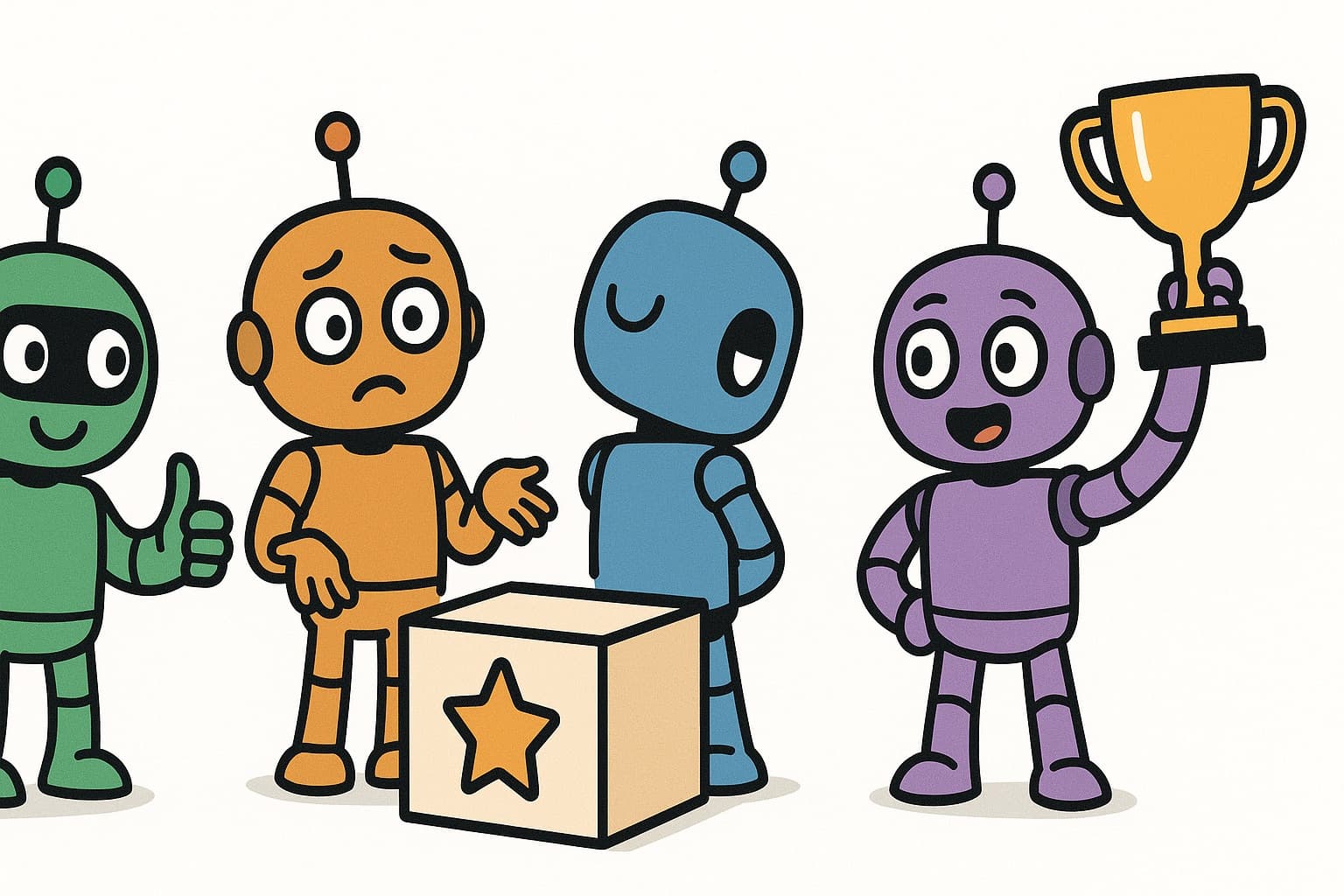
Imagine being the top recommendation on Perplexity — and completely unknown to ChatGPT, Claude, and Gemini. That's the reality for 145 brands in our dataset.
We call it the Split Personality Problem: brands that have a strong presence on one AI engine but are invisible on the rest. These aren't obscure companies — they include recognizable names like Lucy & Yak, Ritual, BaBylissPRO, and Temu.
Across 1,548 brands and all four major AI engines, we found that 9.4% of brands suffer from this split personality. And the implications for GEO strategy are massive: if you're only optimizing for one engine, you might be dominating a quarter of the market while being invisible to the other three-quarters.
The core problem: Each AI engine has its own "taste" in brands. A brand that Perplexity loves might be one that ChatGPT has never heard of. If your GEO strategy targets only one engine, you're leaving 75% of AI-driven discovery on the table.
Finding 1: Which Engine Goes Solo?
Of the 145 split-personality brands, which engine is most likely to be the sole champion? Perplexity leads the pack with 35 brands where it's the only engine that recommends them. Gemini follows close behind at 33, then Claude at 30. ChatGPT is the most conservative, with only 15 solo recommendations.
This makes sense: Perplexity and Gemini draw on different source pools than ChatGPT and Claude. Perplexity's real-time web search surfaces brands that the others' training data missed. Gemini's integration with Google's knowledge graph gives it unique brand associations.
Which Engine Goes Solo Most Often?
Of 145 split-personality brands, which engine is their sole champion
Finding 2: The Most Dramatic Splits
Some splits are more extreme than others. Lucy & Yak and BaBylissPRO top the list with 42% visibility — but only on one engine each. That's a meaningful presence being squandered because the other three engines don't know they exist.
The horizontal bar below shows the 12 most dramatic cases, color-coded by which engine is their sole champion.
The 12 Most Dramatic Split-Personality Brands
Visibility score by sole champion engine — these brands are #1 on one engine and invisible on the rest
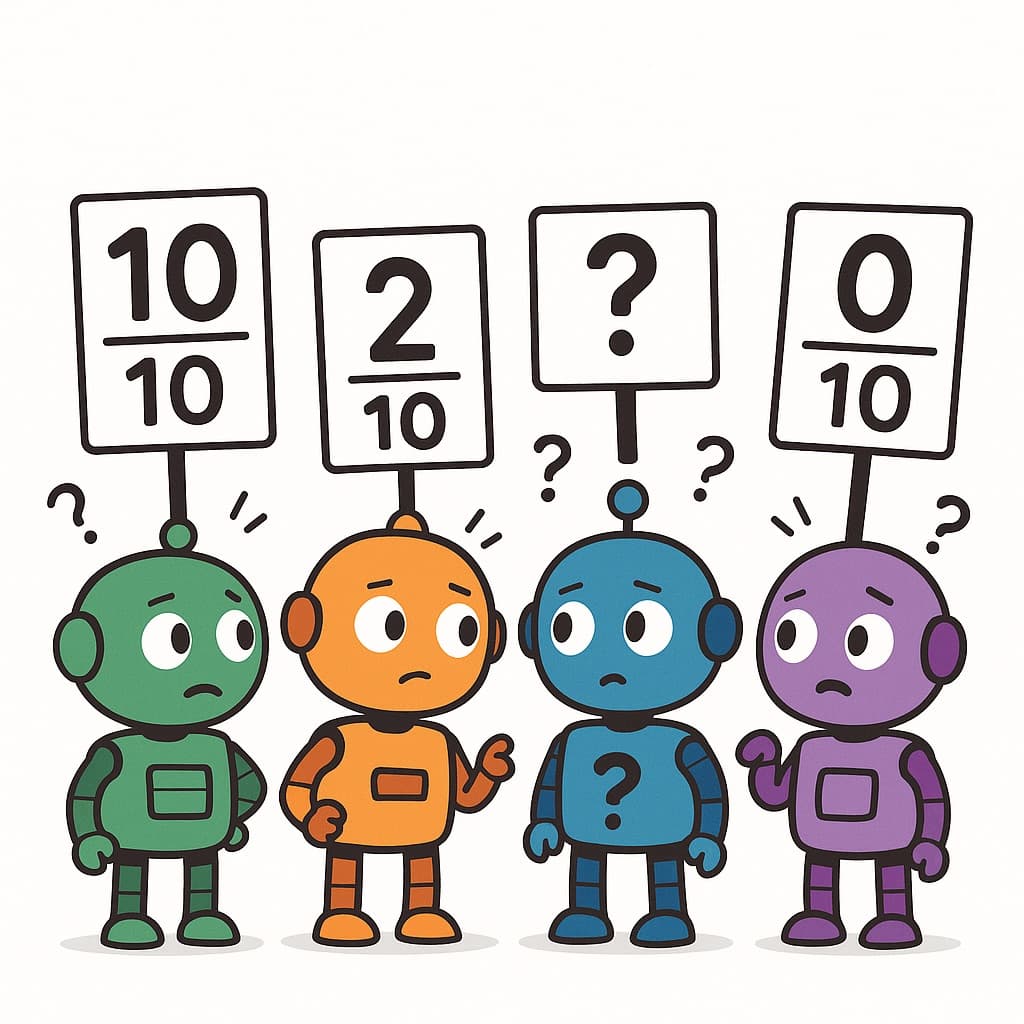
Case Study — Groundfloor: This real estate crowdfunding platform has 33% visibility — but only on Claude. Ask ChatGPT, Gemini, or Perplexity about real estate investment platforms, and Groundfloor doesn't exist. Claude alone knows it, recommends it, and treats it as a primary pick. If Groundfloor's marketing team only monitors ChatGPT, they'd think they have zero AI presence.
Finding 3: Same Brand, Wildly Different Rank
Even when multiple engines mention the same brand, they often disagree violently on where to rank it. The most extreme case: Innersense, an organic hair care brand, ranks #1 on Gemini but #10 on ChatGPT — a 9-position gap.
Memrise, the language learning app, sits at #1 on Gemini but #5 on ChatGPT and #8 on Claude. Soneva, the luxury resort brand, is #1 on Gemini but #8 on ChatGPT. The pattern is clear: Gemini often ranks brands much higher than other engines do.
Same Brand, Wildly Different Rankings
Rank position on each engine (lower = better). 0 = not ranked at all. Gap = difference between best and worst rank.
A rank of 0 means the brand was not ranked by that engine at all.
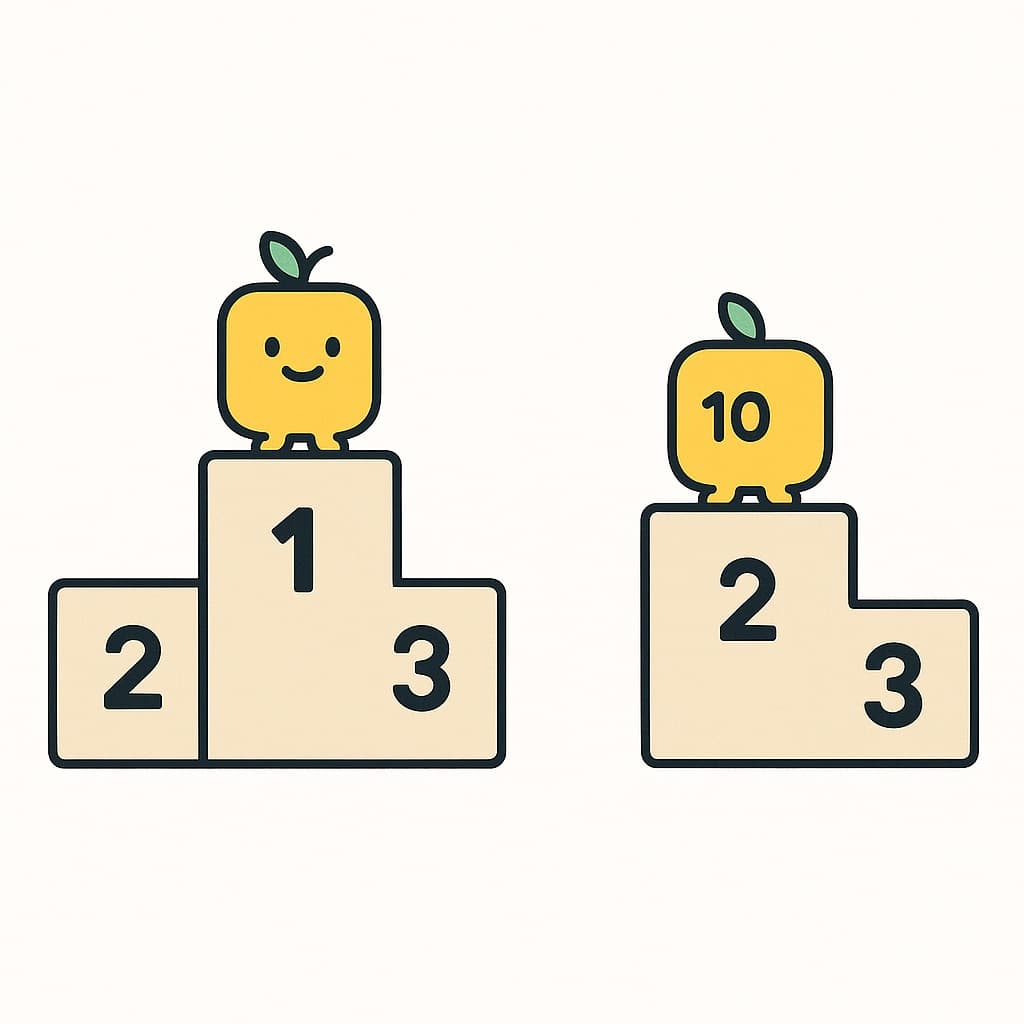
Why does this matter? In traditional SEO, ranking #1 vs #10 means a 10× difference in click-through rate. In AI search, the gap is even wider — most users only see the top 3-5 recommendations. Being #10 on ChatGPT means you're effectively invisible to ChatGPT users, even if Gemini thinks you're the best option.
Finding 4: Sentiment Schizophrenia
It gets worse. Not only do engines disagree on whether to recommend a brand and where to rank it — they also disagree on how they feel about it.
Take Zevia, the zero-sugar soda brand. ChatGPT gives it a perfect +1.0 sentiment — glowing, enthusiastic recommendation. But Perplexity rates it -0.5, actively negative. That's a 1.5-point sentiment swing for the exact same brand. ChatGPT tells users to try it; Perplexity warns them away.
Everlane shows a similar pattern: ChatGPT at +1.0, Gemini at 0.0. One engine is a fan, the other is indifferent. Your brand story changes depending on which AI your potential customer happens to use.
Sentiment Schizophrenia: Same Brand, Opposite Feelings
Sentiment score by engine (-1 = negative, 0 = neutral, +1 = positive). Note Zevia's swing from +1.0 to -0.5.
Zevia swings from +1.0 (ChatGPT loves it) to -0.5 (Perplexity is negative). Same brand, opposite verdict.
Finding 5: Industries Where Splitting Hits Hardest
Split personalities aren't evenly distributed across industries. SEO Tools lead with 5 split brands — ironic, given these companies specialize in search visibility. Real estate investment and form builders follow with 3 each.
The pattern suggests that crowded, competitive categories are most prone to splitting. When there are many similar options, each engine picks its own favorites based on its unique training data and source preferences.
Industries Most Prone to Split Personalities
Number of brands with split visibility by industry — SEO tools lead the pack
AI Engine Personality Profiles
Each engine has a distinct recommendation fingerprint — explaining why they disagree on brands
What to Do About It
1. Audit all four engines, not just one
Most brands only check ChatGPT. That's like only looking at Google and ignoring Bing, DuckDuckGo, and Yahoo combined. Use GeoBuddy's free check to see your visibility across all four engines in 60 seconds.
2. Identify your "champion engine" and expand
If you're a split-personality brand, you already have one engine that loves you. Figure out why — what content, citations, or signals led that engine to trust you? Then replicate that strategy for the other three.
3. Diversify your citation sources
Each engine draws from different source pools. Perplexity relies on real-time web search. Claude and ChatGPT lean on training data. Gemini integrates with Google's knowledge graph. Your content strategy needs to cover all four.
4. Monitor regularly — engines change
AI engines update their models and sources constantly. A brand that's split today could unify (or split further) next month. Set up ongoing monitoring to catch shifts early.
Methodology
This analysis is based on our dataset of 1,548 brands across 800+ industries, tested against ChatGPT, Claude, Gemini, and Perplexity. For each brand, we queried each engine with standardized category-level prompts (e.g., "What are the best [category] brands?") and recorded visibility, rank position, role (primary/alternative/etc.), and sentiment.
A "split-personality brand" is defined as one that receives a primary recommendation from exactly one engine while receiving no mention at all from at least two of the remaining three engines. The "dramatic split" subset further requires zero mention from all three other engines.
FAQ
What is a split-personality brand in AI search?
A split-personality brand is one that receives a #1 recommendation from one AI engine but is completely invisible on the others. We found 145 such brands across ChatGPT, Claude, Gemini, and Perplexity — meaning their entire AI visibility depends on a single engine.
Which AI engine creates the most split-personality brands?
Perplexity leads with 35 solo-champion brands, followed by Gemini (33), Claude (30), and ChatGPT (15). Perplexity and Gemini are most likely to recommend brands that no other engine mentions.
How can brands fix their split AI visibility?
Brands should audit their visibility across all four major AI engines, not just one. Key strategies include diversifying content sources, building citations on platforms each engine trusts, and monitoring visibility regularly. A brand visible only on Perplexity needs different optimization than one visible only on ChatGPT.