
Your brand shows up in ChatGPT. Great. But how does it show up? If AI mentions you as "another option to consider" instead of "the best choice," you're stuck in the Alternative Trap.
We analyzed 18,000 AI responses across ChatGPT, Claude, Gemini, and Perplexity to understand not just whether brands get mentioned, but how they get positioned. The results reveal a critical distinction that most brands are ignoring: being mentioned is not the same as being recommended.
The uncomfortable truth: More than half of all AI brand mentions position the brand as a secondary choice. Your "AI visibility" metric might be hiding the fact that AI is actively steering users away from you.
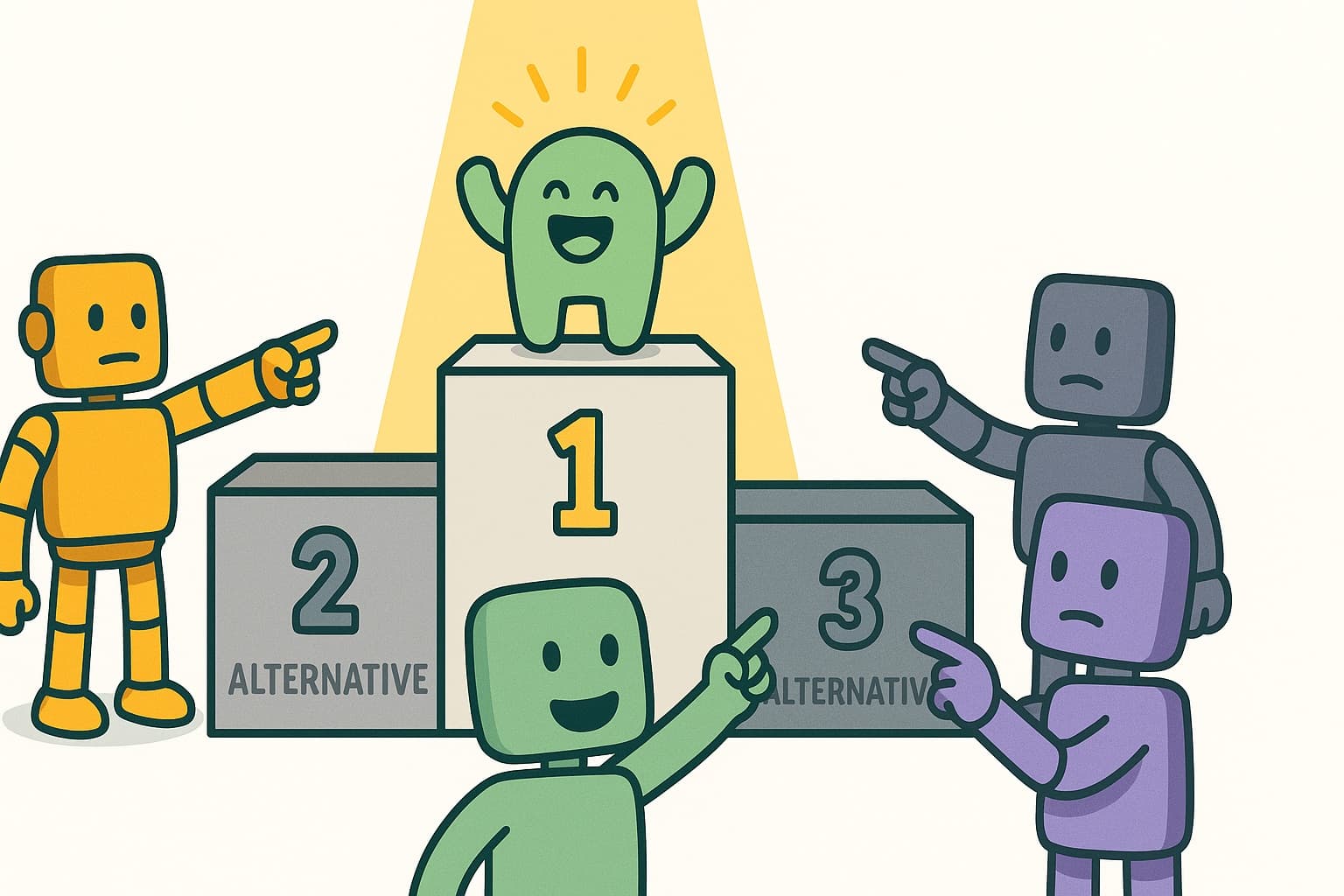
Finding 1: The Role Hierarchy — Not All Mentions Are Equal
When AI mentions a brand, it assigns one of three roles:
- Primary Recommendation — "I recommend X" or "The best option is X." The brand leads the response.
- Alternative — "You could also consider X" or "Another option is X." The brand is positioned as a backup.
- Neutral — "X exists in this space" — mentioned without endorsement or comparison.
Across all engines, 51% of mentions are alternatives — meaning the majority of AI "visibility" is actually AI hedging. ChatGPT and Claude are the worst offenders, positioning brands as alternatives 53% and 51% of the time respectively.
How Each AI Engine Positions Your Brand
Percentage of mentions that are Primary, Alternative, or Neutral — Gemini is the only endorser
Key insight: ChatGPT and Claude behave like cautious advisors — they mention many brands but rarely commit to one. Gemini is the outlier: it endorses more than it hedges, giving 51% of its mentions the "primary" label.
Finding 2: Primary Brands Win Everything
The distinction between primary and alternative isn't just semantic — it's a performance chasm. Brands that earn primary recommendations enjoy dramatically higher visibility and sentiment across every metric.
Primary vs Alternative: The Performance Gap
Primary recommendations enjoy 2.1× more visibility and 1.7× better sentiment
This creates a compounding advantage. Higher visibility means more training data referencing the brand positively, which leads to more primary recommendations in future model updates. The rich get richer.
The math is brutal: A primary brand with 52.1 average visibility gets roughly 2\u00d7 the exposure of an alternative brand at 24.5 — across every single user query, every single day. Over millions of queries, this gap becomes an insurmountable moat.
Finding 3: Gemini Is the Only True Endorser
Not all AI engines are created equal when it comes to brand endorsement. While ChatGPT, Claude, and Perplexity all hover around 30% primary recommendation rate, Gemini stands alone at 51% — the only engine that endorses more than it hedges.
This matters strategically. If you're optimizing for "AI visibility," you need to know that Gemini is 1.7\u00d7 more likely to position your brand as the top pick compared to other engines. For brands fighting to escape the Alternative Trap, Gemini may be the most important engine to win first.
Gemini: The Only True Endorser
Primary recommendation rate when a brand is mentioned — Gemini is 1.7× more likely to endorse
Why does Gemini endorse more? Our hypothesis: Google's training data includes real-world purchase signals, reviews, and Maps data that other engines lack. This gives Gemini higher confidence in making definitive recommendations rather than hedging with alternatives.
Finding 4: Industry Determines Your Ceiling
Your industry sets the upper bound on how likely you are to earn a primary recommendation. Some categories are natural endorsers — AI has clear winners and says so. Others are perpetual hedge zones where AI refuses to commit.
Fashion Marketplaces, Robo-Advisors, and Men's Grooming top the charts at 80% primary rate. At the bottom, Coffee Chains sit at just 12% — in a commoditized category, AI almost never picks a winner.
Industry Determines Your Ceiling
Primary recommendation rate by industry — some categories endorse freely, others almost never
The pattern is clear: differentiated categories with clear market leaders get endorsements; commoditized categories with many similar options get hedging. If your industry has a low primary rate, you need to work harder to differentiate — or redefine the category entirely.
Finding 5: The Endorsement Funnel — From 1,548 to 80
We tracked 1,548 brands through the full endorsement pipeline. At each stage, the funnel narrows dramatically:
The Endorsement Funnel
How many brands survive each stage — from tested to universally endorsed
Only 5.2% of brands earn a primary recommendation from every major AI engine. The funnel narrows dramatically at each stage.
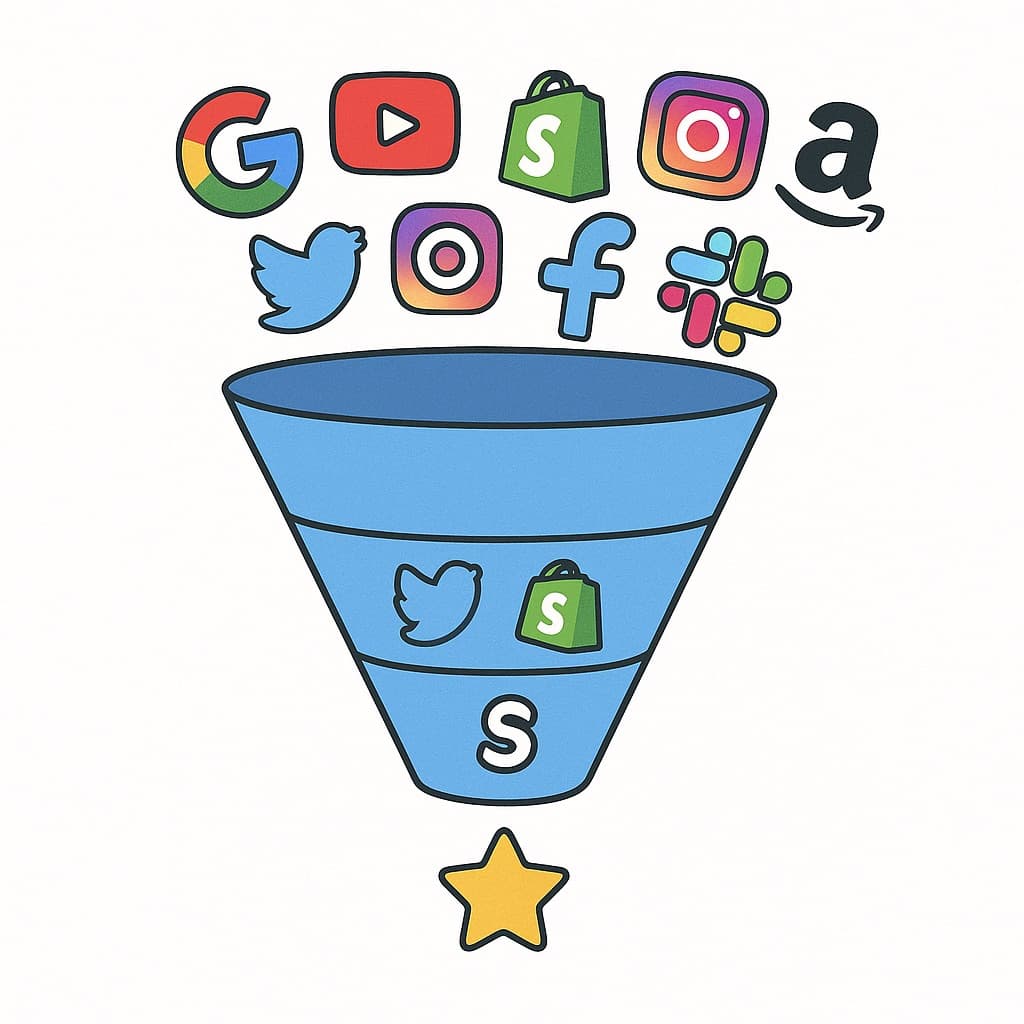
Only 5.2% of brands earn a primary recommendation from every major AI engine. That's roughly 80 brands out of 1,548. If your brand isn't among them, at least one engine is actively positioning you as second choice.
How to Move from Alternative to Primary
1. Audit your current role across all engines
Before you can fix the problem, you need to know where you stand. Are you primary, alternative, or invisible — and does it differ by engine? Check your brand free across all 4 engines. Don't celebrate "mentioned" — dig into how you're mentioned.
2. Own a definitive position, not a broad category
AI gives primary recommendations when it has high confidence. Brands that own a specific niche — "the best robo-advisor for beginners" vs. just "a robo-advisor" — are far more likely to earn the top spot. Narrow your positioning to increase AI confidence.
3. Create "best in class" content that AI can reference
AI models learn from content that makes clear, authoritative claims. Publish comparison content where your brand is positioned as the leader. Create definitive guides that establish your product as the default choice. The training data matters.
4. Build consensus across sources
AI cross-references multiple sources. If 3 out of 5 review sites call you the "best option," AI is more likely to recommend you as primary. Earn top spots in G2, Capterra, TrustRadius, and industry-specific review sites simultaneously.
5. Monitor your role, not just your visibility
Traditional AI visibility metrics don't distinguish between primary and alternative. Track your role over time. A brand that moves from 40% visibility (all alternatives) to 30% visibility (all primaries) has actually improved its position dramatically.
Methodology
We queried ChatGPT (GPT-4o), Claude (3.5 Sonnet), Gemini (1.5 Pro), and Perplexity with standardized recommendation prompts across 50+ product categories, generating 18,000+ responses covering 1,548 unique brands. Each brand mention was classified as Primary Recommendation, Alternative, or Neutral using a combination of LLM-based classification and manual review of 2,000+ edge cases. Visibility and sentiment scores were calculated using our standard GeoBuddy methodology.
FAQ
What is the "Alternative Trap" in AI search?
The Alternative Trap is when AI engines mention your brand but position it as an "alternative" or "also consider" option rather than a primary recommendation. Our analysis shows 51% of brand mentions fall into this trap — being mentioned but never endorsed as the #1 choice.
How do primary recommendations differ from alternatives in AI?
Primary recommendations receive 2.1\u00d7 more visibility (52.1 vs 24.5 average) and 1.7\u00d7 better sentiment scores (0.64 vs 0.37). Being primary means the AI actively endorses your brand as the best option, while alternatives are mentioned as secondary or fallback choices.
Which AI engine is most likely to give primary recommendations?
Gemini is the only AI engine that endorses more than it hedges — 51% of its mentions are primary recommendations compared to just 30% for ChatGPT, Claude, and Perplexity. This makes Gemini 1.7\u00d7 more likely to position a brand as the top pick.