
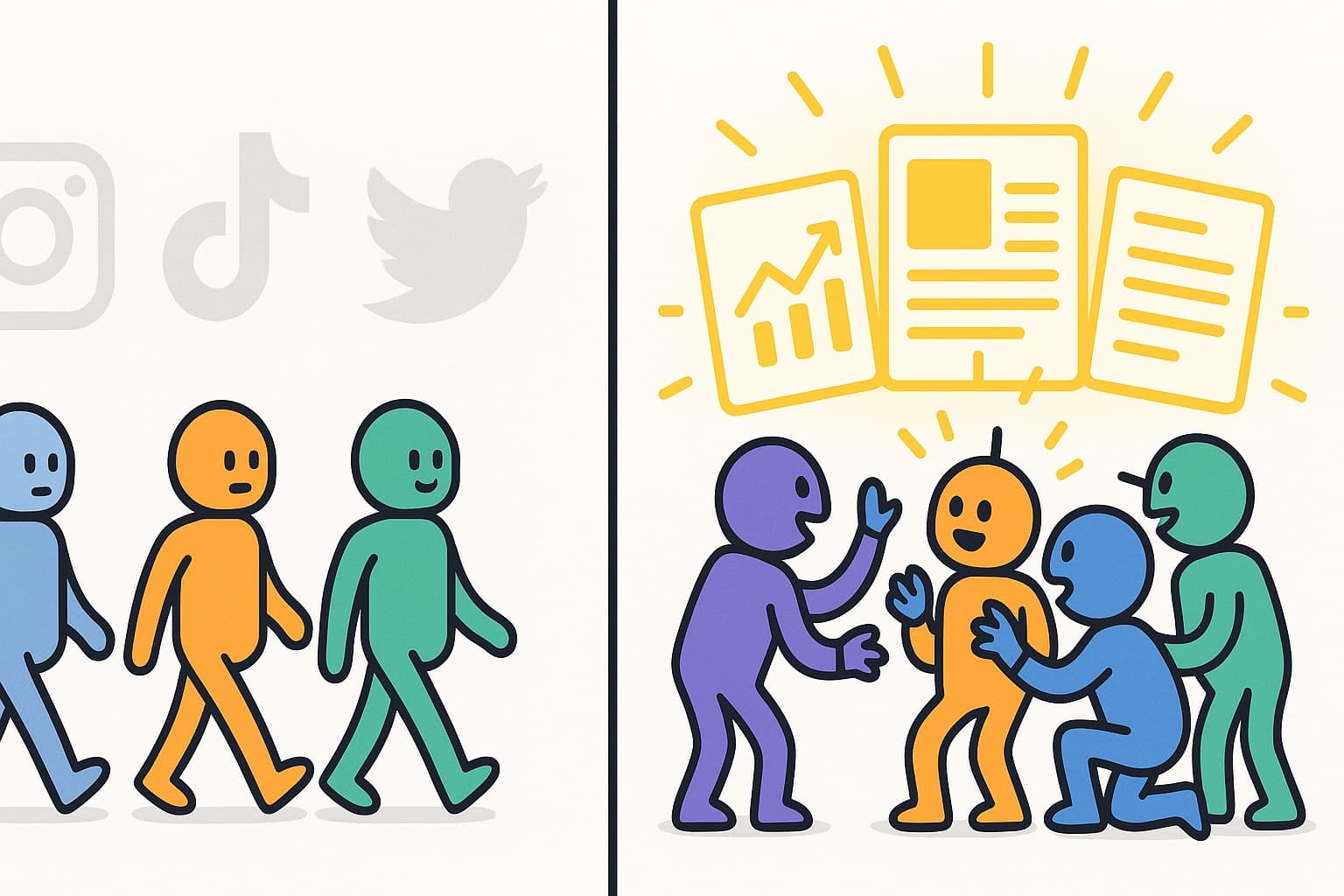
Your marketing team posts 5 Instagram Reels a week. Your CEO just started a TikTok. You have a Twitter/X content calendar with daily threads. And none of it matters for AI visibility. Not a single citation.
We analyzed 321 citations extracted from 18,000+ AI-generated responses across ChatGPT, Claude, Gemini, and Perplexity. The result? Zero citations from Instagram. Zero from TikTok. Zero from Twitter/X. Zero from Facebook. Zero from LinkedIn. Social media is completely absent from the sources AI trusts.
Meanwhile, SEO blogs like Semrush and Ahrefs, Google's own properties, and educational content dominate. If you're investing in social media for AI discoverability, you're investing in the wrong channel entirely.
The Uncomfortable Truth: What AI Actually Cites
When we categorized all 321 citations by source type, the breakdown was stark: 96.3% came from brand blogs, product pages, and professional content sites. Government and educational sources accounted for 2.5%. UGC and forums scraped in at 0.6%. Developer documentation got another 0.6%.
And social media? Exactly zero percent. Not a rounding error. Not a “less than 1%.” Literally zero citations from any social media platform across our entire dataset.
Citation Source Type Breakdown
321 citations analyzed — Social media accounts for exactly 0%
Finding #1: The Domains AI Trusts Most
The top cited domains reveal a clear pattern. Google properties collectively account for 85 citations (26%) — ads.google.com, developers.google.com, google.com, search.google.com, analytics.google.com, and youtube.com.
SEO tool blogs are AI's favorite independent sources. Semrush (24), Ahrefs (21), GTmetrix (6), Moz (5), and Neil Patel (5) collectively account for 61 citations. Their long-form, data-rich comparison articles are exactly what AI considers authoritative.
The pattern is clear: AI trusts structured, text-heavy, data-backed content on established domains. Not viral posts. Not stories. Not reels. The content that ranks in traditional search is the same content that AI cites.
Top Cited Domains — What AI Actually Trusts
SEO tool blogs and Google properties account for 43% of all citations
Finding #2: Social Media Is Literally Zero
To put this in perspective: seven major social media platforms combined produced zero citations, while just three content sources (Semrush, Ahrefs, and Google properties) produced 130.
Instagram has over 2 billion monthly active users. TikTok has 1.5 billion. Twitter/X processes 500 million tweets per day. And yet AI engines treat all of this content as if it doesn't exist when deciding what to cite.
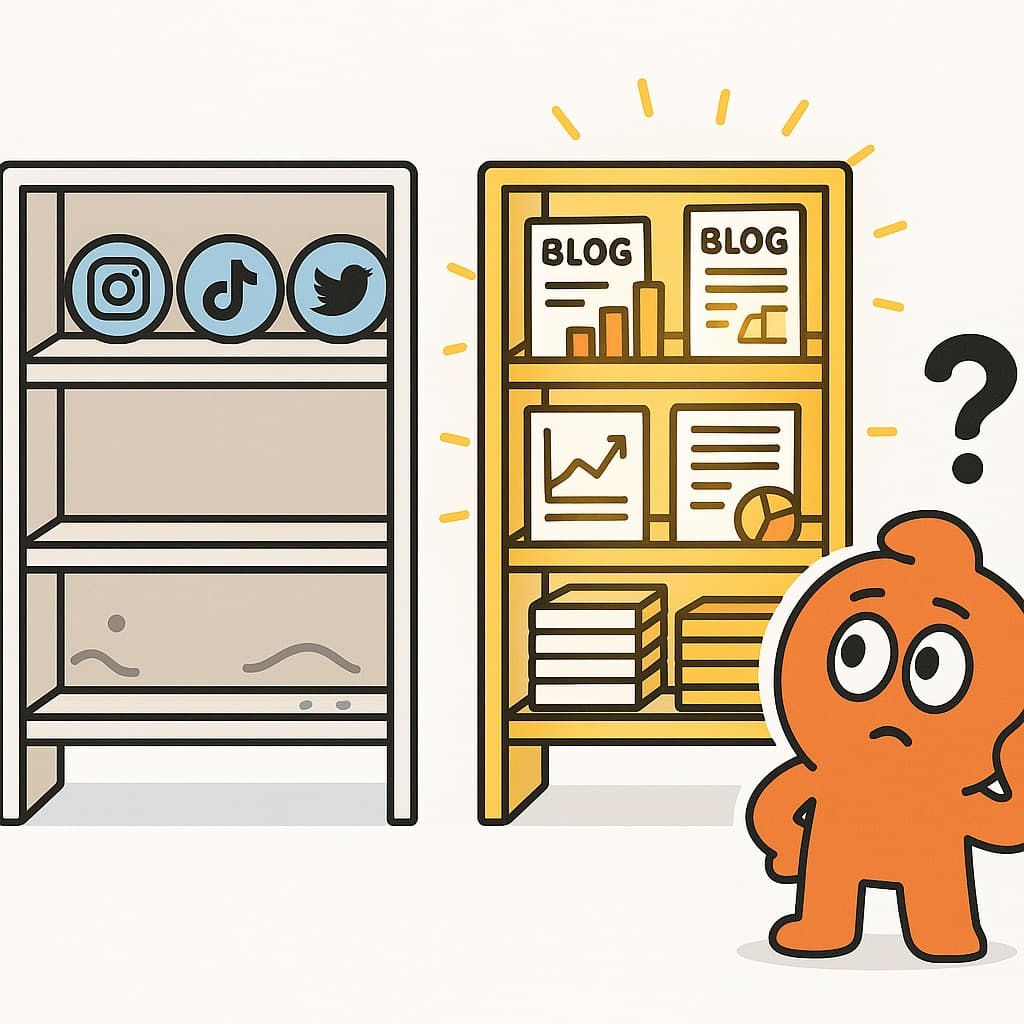
What’s MISSING — Platforms AI Never Cites
7 major social platforms: 0 citations. 3 content sources: 130 citations.
This isn't a sampling problem. We extracted citations from 18,000+ AI responses. If social media were cited even occasionally, we would have found it. The absence is structural, not statistical.
Finding #3: The Content AI Trusts
When we categorized citations by content type, the hierarchy became even clearer:
- Comparison and review articles (~45%) — “Best CRM for small business,” “Ahrefs vs Semrush,” “Top 10 project management tools.” This is the single most cited content type.
- Product documentation (~25%) — official docs, API references, help centers. Structured, authoritative, frequently updated.
- Educational content (~15%) — courses, tutorials, how-to guides from established educational platforms.
- News and media (~8%) — press coverage, industry reports, published research.
- Government and official sources (~5%) — .gov, .edu, regulatory pages.
- Social media posts (0%) — not a single citation.
What makes content “citable”? Three qualities: (1) text-heavy with structured data, (2) persistent URLs that don't expire, and (3) published on domains with established authority. Social media fails all three.
Content Types That Get Cited by AI
Comparison articles and product docs dominate — social media is absent
Finding #4: Each Engine Cites Differently
Not all engines cite equally. Gemini is the most citation-heavy engine with 148 extractable citations, followed by ChatGPT with 124. Claude (25) and Perplexity (22) are far more conservative.
ChatGPT uses distinctive utm_source=openai tracking parameters in its links, making its citations easy to identify and track. When ChatGPT cites a source, it's a deliberate editorial choice.
Perplexity uses inline [1][2] reference format, similar to academic papers. While it always provides sources, many are rendered as footnotes rather than extractable URLs in our parsing.
Claude is the most conservative — it rarely provides direct source links, preferring to synthesize information without explicit attribution.
But across all four engines, the result is the same: none of them cite social media content.
Citation Count by AI Engine
Gemini and ChatGPT produce the most extractable citations
Perplexity uses inline [1][2] format with fewer extractable URLs. Claude rarely provides source links.
Why Social Media Fails for AI Citations
Social media's absence from AI citations isn't accidental. There are four structural reasons why AI engines can't — or won't — cite social media content:
1. Ephemeral by Design
Social media content is designed to be temporary. Instagram Stories disappear in 24 hours. Tweets get buried in timelines. TikToks trend and vanish. AI engines need persistent, stable URLs they can reference. Social media's entire value proposition is recency, which is the opposite of what AI considers authoritative.
2. Visual-First, Text-Last
Instagram is images and Reels. TikTok is video. Even Twitter has shifted toward visual content. AI engines are fundamentally text-based systems. They can't parse the value proposition in a 15-second video or extract data from an infographic. The information that lives in social media is trapped in formats AI can't efficiently index.
3. Unstructured and Noisy
A Semrush blog post has clear headings, data tables, structured comparisons, and a logical flow. A Twitter thread is informal, fragmented, and mixed with replies, jokes, and hot takes. AI engines need signal-to-noise ratio that social media simply can't provide.
4. Walled Gardens and API Restrictions
Most social platforms have restricted or eliminated public API access. Twitter/X charges for API access. Instagram and TikTok content requires authentication to view programmatically. Even if AI engines wanted to cite social content, the platforms make it technically difficult to crawl and index.
What to Do Instead: Redirect Your Content Budget
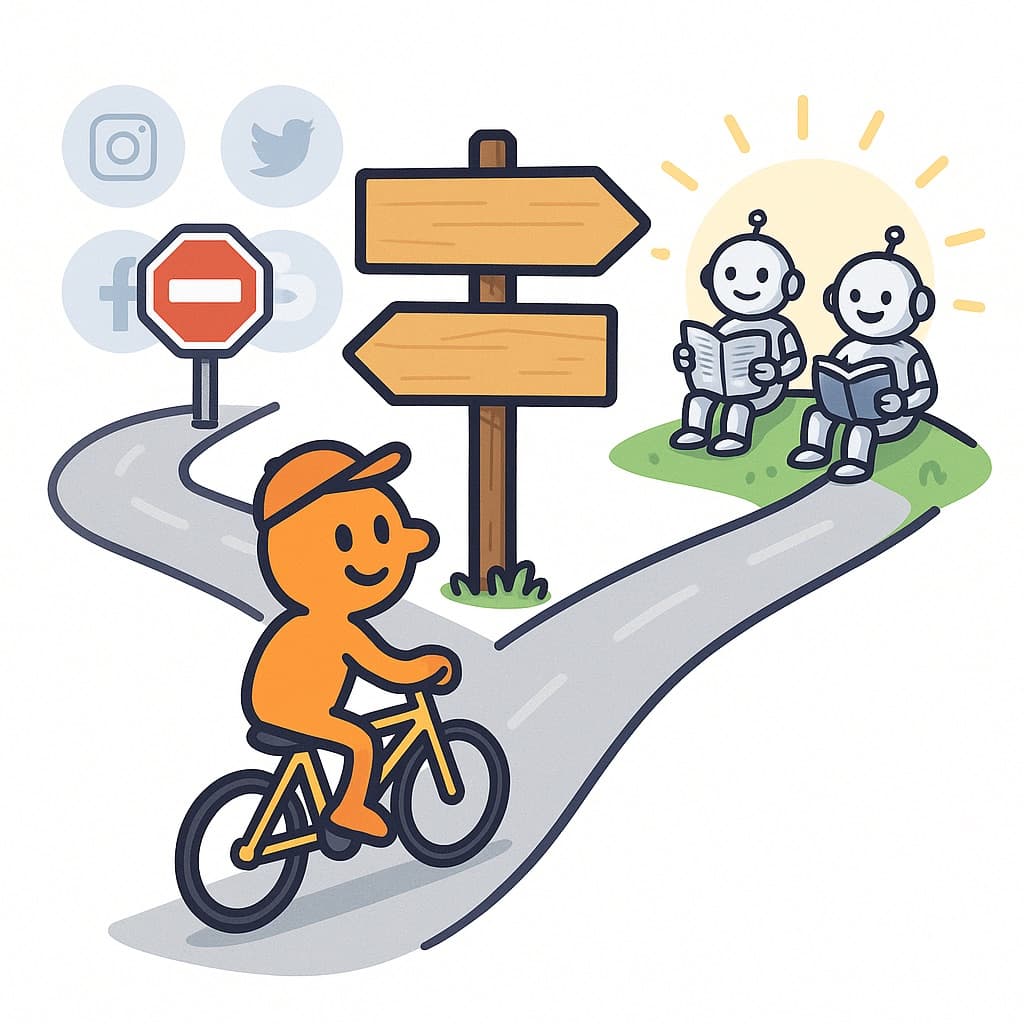
This doesn't mean social media is useless — it's great for brand awareness, community building, and customer engagement. But if your goal is AI visibility, here's where to invest instead:
1. Write Definitive Comparison Content
45% of AI citations come from comparison and review articles. Write the definitive “Best [X] for [Use Case]” guide in your category. Make it data-rich, regularly updated, and comprehensive. Be the source that AI cites when someone asks for recommendations.
2. Invest in Product Documentation
25% of citations come from documentation. If your help center, API docs, or knowledge base is thin, you're leaving AI citations on the table. Well- structured documentation with clear headings and examples is exactly what AI engines look for.
3. Create Educational Content on Your Domain
Don't write your best educational content as Twitter threads or LinkedIn posts. Publish it on your own domain as proper blog posts with structured data. The same content that would get likes on social media gets cited when it lives on your website.
4. Build Authority Through Backlinks, Not Followers
AI engines weight domain authority similarly to traditional search engines. A domain with strong backlinks from other authoritative sites is more likely to be cited. Your Instagram follower count contributes nothing to this equation.
The ROI calculation is simple: A single well-written comparison article on your domain can generate AI citations for months. A week of Instagram Reels generates zero. If AI visibility matters to your business, the content budget reallocation is obvious.
Methodology
- Dataset: 321 extracted citations from 18,000+ AI responses
- Engines tested: ChatGPT, Claude, Gemini, Perplexity
- Citation extraction: URLs parsed from response text, footnotes, and inline references
- Classification: Each citation manually categorized by source type, domain, and content type
- Time period: February\u2013March 2026
- Limitation: Some engines (especially Claude) synthesize information without providing explicit URLs. The actual knowledge sources may be broader than extractable citations suggest.
FAQ
Does social media content help with AI visibility?
No. Our analysis found zero citations from Instagram, TikTok, Twitter/X, Facebook, LinkedIn, or Pinterest across 321 AI citations. AI engines cite SEO blogs, Google properties, and product documentation — not social media posts.
What content types do AI engines cite most?
Comparison and review articles (~45%), product documentation (~25%), and educational content (~15%) dominate. Social media accounts for 0% of citations. The content AI trusts is text-heavy, data-backed, and published on domains with established authority.
Which AI engine provides the most citations?
Gemini leads with 148 extractable citations, followed by ChatGPT (124). Claude (25) rarely provides source links, and Perplexity (22) uses inline reference format that yields fewer extractable URLs. None cite social media.