
6 entire industries. Zero AI visibility. Not low — ZERO.
We analyzed 1,548 brands across every major industry and tested them against four AI engines: ChatGPT, Claude, Gemini, and Perplexity. What we found was a divide so extreme it shouldn't exist — but it does.
In 6 industries, every single brand is invisible. Ask any AI engine to recommend a product in these categories and you'll get generic advice, hallucinated suggestions, or outright "I don't have specific recommendations." In 15 industries, the average visibility score is below 5 out of 100. Meanwhile, Fashion Marketplaces average 71.8.
The gap between the dead and the thriving isn't a gradient. It's a cliff.
6
Zero Industries
100% invisible
15
Dead Industries
Avg visibility < 5
766+
Invisible Brands
Never mentioned
90×
The Gap
Fashion vs Marketplace
Why this matters: AI search is rapidly becoming the primary discovery channel for products and services. If your entire industry is invisible to AI, you're not just losing a marketing channel — you're becoming structurally undiscoverable to a growing share of buyers. And unlike SEO, where you compete brand-by-brand, AI invisibility affects entire industries at once.
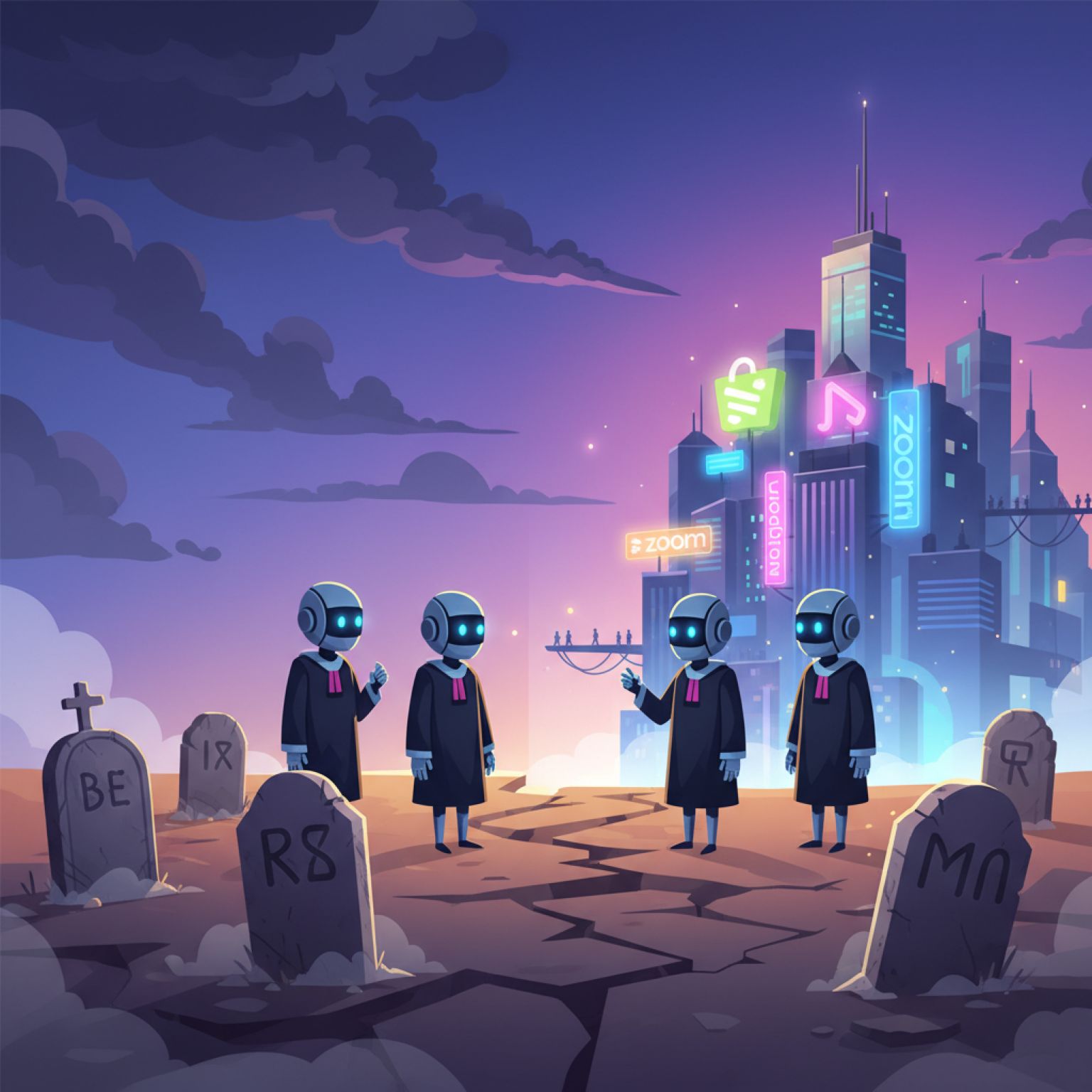
The Industry Graveyard
Let's start with the most damning finding: 6 industries where no brand has any AI visibility whatsoever. This isn't "low visibility." This is complete, total absence.
Ask ChatGPT to recommend an inclusive beauty brand, and it will offer generic advice about "looking for brands that celebrate diversity." Ask it about investment management firms in China, and it gives you Wikipedia-level information. Ask about mining companies, design tools, real estate analytics, or EdTech platforms, and you get the same: vague generalities, zero specific brand recommendations.
6 Industries — ZERO AI Visibility
Every single brand in these industries is completely invisible to all 4 AI engines
Inclusive Beauty
0%Investment Management
0%Mining
0%Design Tools
0%Real Estate Analytics
0%EdTech
0%Beyond the 6 zero-visibility industries, 9 more industries have average visibility scores below 5 — effectively dead. In Skincare, 91% of brands are invisible, with only Medik8 breaking through at a meager 8%. Fashion fares barely better at 0.8 average visibility with 90% invisible.
The full graveyard chart below shows the scale of the problem:
The Industry Graveyard: 15 Industries Below 5% AI Visibility
Average AI visibility score by industry — all effectively dead
6 industries score exactly 0 — every single brand is invisible to AI
Notice the pattern. Beauty, fashion, and personal care dominate the graveyard. Inclusive Beauty, Skincare, Fashion, Inclusive Skincare, Fragrances, Inclusive Color Cosmetics, Organic Skincare — that's 7 of the 15 dead industries. This isn't a coincidence. These industries share a fatal structural weakness that we'll explore shortly.
The 90× Gap: Fashion's Paradox
Here's the statistic that should make every fashion brand founder lose sleep:
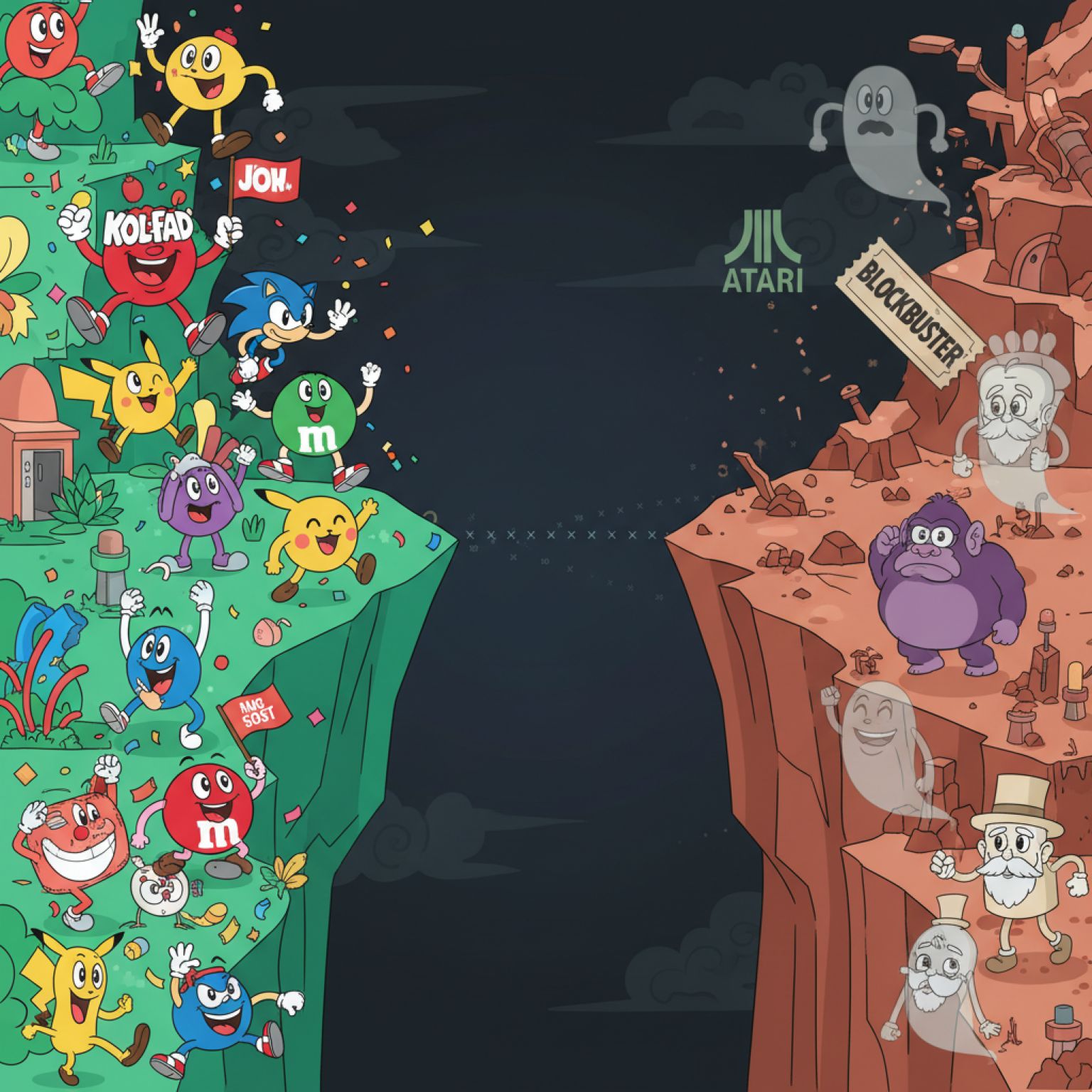
Fashion brands average 0.8 visibility. Fashion Marketplaces average 71.8.
Same word. Same industry umbrella. 90× different outcome.
How is this possible? The answer reveals the fundamental mechanics of what makes AI recommend a brand — and it has nothing to do with brand quality, Instagram followers, or even revenue.
The 90× Gap: Same Word, Different Universe
"Fashion" brands vs "Fashion Marketplace" platforms — the word is the same, the outcome is 90× different
Fashion Marketplaces like ASOS, Farfetch, and Poshmark are text-rich aggregation platforms. They host thousands of product reviews, comparison articles, editorial roundups, buyer guides, and user-generated discussions. This is exactly the kind of content AI engines are trained on and can cite.
Individual fashion brands? They live on Instagram. Their content is visual — lookbooks, runway shots, influencer posts, Stories. Beautiful, compelling content for humans. Completely invisible to language models that can't see images and don't index social media posts.
The Instagram Trap: An entire generation of DTC brands built their discovery strategy around visual social platforms. This worked brilliantly for a decade. But AI search engines don't crawl Instagram. They don't parse TikTok. They can't see your Pinterest boards. If your brand's primary content footprint is visual and social, you are structurally invisible to AI — no matter how strong your brand is with human audiences.
Why Dead Industries Die in AI
Across the 15 dead industries, we identified four structural factors that explain the AI invisibility. These aren't flaws in the brands — they're characteristics of the industries themselves that make AI visibility nearly impossible without deliberate intervention.
1. Visual-First Content Strategy
Beauty, fashion, and skincare brands communicate through images and video. Product photos, tutorial videos, before-and-after shots, influencer content. AI engines process text. The mismatch is total. A brand with 2 million Instagram followers but no blog, no comparison guides, no written reviews — that brand simply doesn't exist in AI training data.
2. No Review Ecosystem
Thriving industries (CRM, e-commerce platforms, trading platforms) have robust review ecosystems: G2, Capterra, TrustRadius, specialized comparison sites. These structured reviews are gold for AI training data. Dead industries (mining, investment management, design tools) either lack review platforms entirely or have reviews scattered across niche forums that AI doesn't index.
3. Instagram-Dependent Discovery
When customers discover brands through Instagram, TikTok, or influencer recommendations, the discovery path generates minimal indexable text content. Compare this to SaaS, where discovery happens through Google searches, blog posts, comparison articles, and review sites — all of which become AI training data.
4. Fragmented Small Brands
Many dead industries consist of dozens of small brands, none with enough individual web presence to register in AI training data. Inclusive Beauty has 7 brands — all small, all founder-led, all focused on community building rather than content publishing. No single brand has the critical mass of web mentions needed for AI recognition.
The compounding problem: These four factors reinforce each other. A visual-first brand in an industry without review platforms, discovered through Instagram, with a small web footprint — that's a brand that's invisible by every dimension AI uses to decide what to recommend. Fixing one factor alone isn't enough. You need to address the structural deficit across multiple dimensions.
Brands AI Actively Warns Against
Being invisible is bad. But there's something worse: being visible with negative sentiment. We found 4 brands where AI engines actively warn users away.
The most striking case is Deutsche Bank. With 33% visibility, it's not invisible — AI knows it exists. But the sentiment score is -0.17. When users ask about banking options, AI mentions Deutsche Bank but frames it with caution: regulatory issues, past controversies, better alternatives available. Being visible but negatively positioned may be worse than being invisible entirely.
RateSetter holds the worst sentiment in our entire dataset at -1.00. Every AI mention is negative. MoonPay at -0.50 gets flagged for crypto-related risk concerns. Weebly at -0.25 is consistently positioned as an outdated alternative to Shopify and Squarespace.
Brands AI Actively Warns Against
These brands have negative AI sentiment — being visible isn't always a good thing
P2P Lending
RateSetter
-1.00
vis: 8%
Crypto Payment
MoonPay
-0.50
vis: 17%
E-commerce
Weebly
-0.25
vis: 25%
Banking
Deutsche Bank
-0.17
vis: 33%
Visibility ≠ Positive visibility. These 4 brands prove that AI visibility has a direction, not just a magnitude. Before celebrating any AI mention, check whether the AI is recommending you or warning users about you. Tools like GeoBuddy's free brand check measure both visibility and sentiment so you know where you actually stand.
Dead vs Thriving: The Full Picture
To fully appreciate the AI search divide, look at dead and thriving industries side by side. The contrast is not a spectrum — it's a binary. Industries are either meaningfully visible or effectively dead. There's almost nothing in between.
Dead vs Thriving: The AI Visibility Divide
Average visibility score — green = thriving, red = effectively dead
The chart above tells the story clearly. Five thriving industries cluster above 29. Fifteen dead industries cluster below 5. The gap between CRM Software (29.6) and Productivity (4.6) is a 6.4× multiplier — and that's the closest the two worlds come to touching.
Now look at the invisibility rates:
Brand Invisibility Rate by Industry
Percentage of brands in each industry that are completely invisible to all AI engines
Fashion Marketplaces and Trading Platforms: 0% invisible. Every single brand in these industries shows up in at least one AI engine. CRM Software: just 14% invisible. Then the cliff: Productivity at 73%, and everything above it at 80-100%.
The dividing line between thriving and dead industries isn't about quality, funding, or market size. It's about whether the industry naturally produces the kind of text content that AI training data captures. Platforms and SaaS tools generate reviews, comparisons, documentation. Beauty and fashion brands generate photos and social content. AI can read the former. It can't read the latter.
The First-Mover Opportunity
Here's the counterintuitive insight from our data: dead industries are the biggest opportunity in AI search.
In thriving industries, competition for AI visibility is fierce. If you're a new CRM tool, you're competing against HubSpot (92% visibility), Zoho (92%), and Salesforce for AI recommendations. Good luck.
But in a dead industry? There's nobody home. If you're the first inclusive beauty brand to build a serious text-content operation — comparison guides, ingredient analysis articles, expert roundups — you don't have to beat anyone. You just have to show up.
This is exactly how LARQ achieved 100% AI visibility in the self-cleaning water bottle space. They weren't competing against established players with massive content operations. They were the first to produce the kind of structured, authoritative content that AI engines cite. Now when anyone asks any AI engine about self-cleaning water bottles, LARQ owns the conversation.
The empty room advantage: In an industry where every competitor is invisible, you don't need to be great at GEO. You just need to be present. The bar is literally at zero. Any brand in inclusive beauty, mining, design tools, EdTech, or real estate analytics that invests in AI-readable content today will own their category's AI narrative for years to come. The compounding advantage of being first is enormous.
What Dead Industries Should Do
If your brand is in one of these 15 dead industries, you have a structural disadvantage — but also a structural opportunity. Here are 5 specific strategies to escape the graveyard:
1. Create Text-Based Comparison Content
Stop relying on visual content alone. Create comprehensive, text-rich comparison guides, ingredient analyses, product roundups, and buyer guides. AI engines need text to cite. If the only content about your products is Instagram photos, AI has nothing to work with. Publish "Best [category] for [use case]" guides that position your brand within a structured comparison framework.
2. Publish Original Research and Data
Original data gets cited. When you publish an industry benchmark, a trend analysis, or a consumer survey, other sites reference your findings. Those citations compound into the kind of distributed authority that AI training data captures. It doesn't need to be expensive — even a survey of 200 customers about buying preferences generates citable data points.
3. Get on Structured Review Platforms
If your industry lacks a review ecosystem, create the incentive for reviews. Encourage customers to review on Google, Trustpilot, or niche platforms. For B2B products, G2 and Capterra reviews are gold for AI visibility. The brands that thrive in AI all have extensive review profiles on structured platforms.
4. Build Third-Party Authority
Guest posts, expert quotes, podcast appearances, industry report contributions — every mention of your brand on an authoritative third-party site becomes potential AI training data. Focus on publications and platforms that AI engines are most likely to reference: industry blogs, news sites, research publications, and established comparison sites.
5. Monitor and Iterate
Check your AI visibility regularly. The landscape changes with every model update. GeoBuddy's free brand check tests your brand across all four major AI engines in 60 seconds. Track your progress over time and adjust your strategy based on which content and channels are actually moving your visibility score.
The 90-day play: In a dead industry, a focused 90-day content push can take you from invisible to category leader in AI search. Publish 10-15 in-depth comparison articles, secure 5-10 third-party mentions, and build a review profile on 2-3 platforms. That's enough to establish presence in an empty field. The first mover advantage in AI search is real, and in dead industries, no one has moved yet.
Is Your Industry Dead in AI Search?
Check your brand's visibility across ChatGPT, Claude, Gemini, and Perplexity in 60 seconds. It's free — and the results might surprise you.
Methodology
This analysis is based on GeoBuddy's comprehensive database of 1,548 brands across all major industries. Each brand was tested against four AI engines (ChatGPT, Claude, Gemini, and Perplexity) using standardized discovery prompts relevant to each brand's category.
AI Visibility Score is measured on a 0-100 scale, representing the percentage of test queries where the brand appeared in the AI engine's response. A score of 0 means the brand was never mentioned. A score of 100 means it appeared in every relevant query across all four engines.
Sentiment Score ranges from -1.0 (entirely negative) to +1.0 (entirely positive), measuring the tone and positioning of AI mentions. Negative sentiment indicates the AI is warning users about the brand.
Invisibility Rate is the percentage of brands in an industry with a visibility score of 0 — complete absence from all AI engine responses.
Industry classifications follow standard market taxonomy. Brands were assigned to industries based on their primary product category and self-identified market positioning.
Frequently Asked Questions
Which industries are completely invisible to AI search?
Six entire industries have 0% AI visibility: Inclusive Beauty (7 brands), Investment Management (8 brands), Mining (6 brands), Design Tools (6 brands), Real Estate Analytics (5 brands), and EdTech (6 brands). Not a single brand from these industries appears in ChatGPT, Claude, Gemini, or Perplexity responses.
Why is there a 90× gap between Fashion and Fashion Marketplace?
Fashion brands average 0.8 AI visibility while Fashion Marketplaces average 71.8 — a 90× difference. The key distinction is content type: marketplaces like ASOS and Farfetch aggregate reviews, comparisons, and user-generated content that AI engines can cite. Individual fashion brands rely on visual content (Instagram, lookbooks) that AI cannot process or reference.
Can brands with negative AI sentiment recover?
Yes, but it requires deliberate effort. Brands like Deutsche Bank (sentiment -0.17) are actively warned against by AI despite being visible. Recovery requires publishing authoritative content that addresses the negative narrative, building positive third-party citations, and monitoring AI responses for improvement over time.
What should brands in dead industries do about AI visibility?
Focus on five strategies: create text-based comparison content, publish original research and data, get listed on structured review platforms, build third-party authority through thought leadership, and monitor your progress continuously. In dead industries, the first brand to optimize for AI can own the entire category — the bar is literally at zero.